Retaining wall problems rarely fix themselves. A wall that has started leaning, cracking, or letting water through is usually telling you that something behind it has changed, and left alone, those problems tend to get worse through each wet Auckland winter.
The good news is that most failing walls give you warning signs well before they collapse. If you catch them early, the fix is often smaller and cheaper than a full rebuild. This article runs through the common signs an Auckland retaining wall needs attention, and how to think about repair versus replacement.
This is a practical guide to what to look for, not engineering advice. If your wall is showing any of these signs, the right next step is getting it inspected.
Quick Answer: When Should You Get a Retaining Wall Checked?
Get the wall looked at if it is doing any of the following:
- Leaning or bulging where it used to be straight
- Cracking through block, concrete, or render
- Rotting or moving at the timber posts
- Showing sunken or dropping ground behind it
- Letting water seep, pool, or push through the face
- Holding back a driveway, building, or slope and showing any of the above
A wall does not have to be falling over to be worth checking. The earlier a problem is diagnosed, the more options you usually have. A small drainage fix or a localised repair caught early can save a full retaining wall replacement later.
Sign 1: The Wall Is Leaning or Bulging
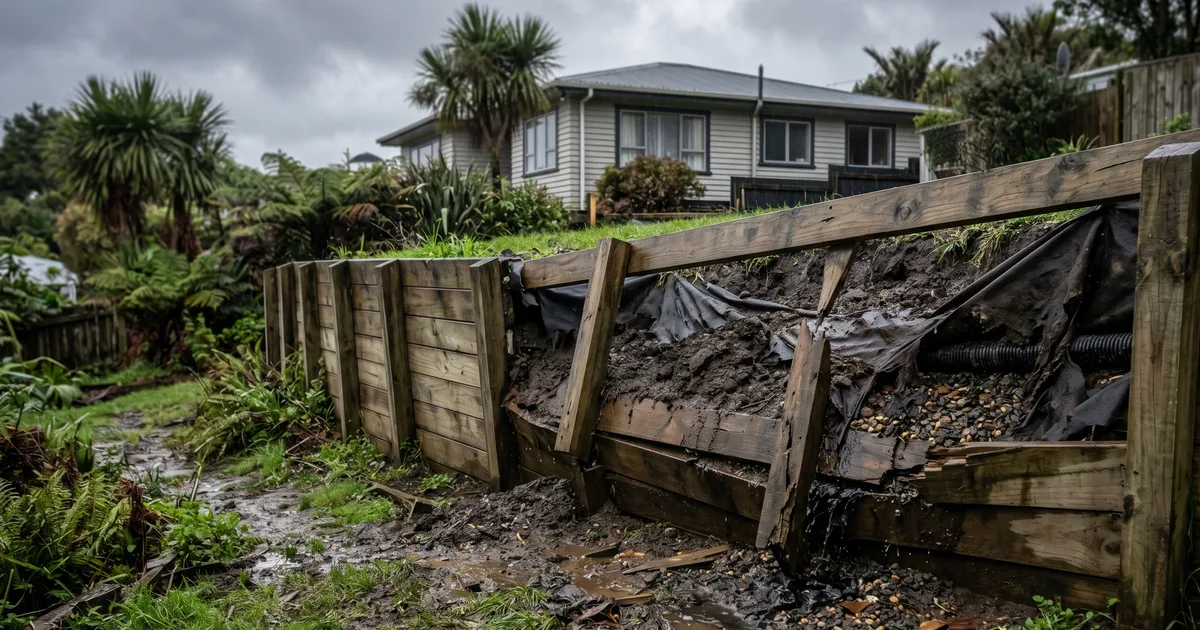
A retaining wall is built to hold ground back at a fixed angle. When it starts tilting forward or bulging out in the middle, the pressure behind it has won, at least partly.
That pressure usually comes from two things: the weight of the soil, and the weight of water trapped in that soil. On Auckland clay, water is often the bigger culprit, because clay holds water and pushes hard against anything in its way.
Leaning is more serious when the wall is holding back something heavy: a driveway, a building, a steep slope, or a neighbour’s section sitting higher than yours. The more load above the wall, the less margin there is once it starts to move.
A slight lean that has been stable for years is a different situation to a wall that has moved noticeably in one season. Either way, movement is the clearest sign that the wall is no longer doing its job the way it was built to.
Sign 2: Cracks in Block, Concrete, or Keystone Walls
Not every crack means disaster. Fine surface cracks in render or mortar can be cosmetic. But some crack patterns point to movement in the wall or the ground behind it:
- Stair-step cracks running diagonally through block joints
- Cracks that are widening over time, especially after wet weather
- Separation where one section of wall is pulling away from another
- Horizontal cracks part way up a block or concrete wall
The pattern and direction of a crack tells you more than its size. A hairline crack that is growing is more concerning than a wider crack that has not changed in years. If you are not sure, mark the ends of the crack with a pencil and a date, then check it again after the next big rain. If it has moved, get it assessed.
Sign 3: Rotting Timber Posts or Rails
A large number of Auckland retaining walls were built in the 1980s and 1990s using treated timber. Many of those walls are now reaching the end of their service life, and timber fails in predictable ways:
- Posts going soft or spongy at ground level, where moisture sits
- Rails twisting, splitting, or pulling away from the posts
- Gaps opening up between rails as the timber shrinks and moves
- The whole wall starting to lean as the posts lose strength
Ground level is where timber posts usually fail first, because that is where they stay wettest. A post can look fine above ground and be rotten right where it matters. How long a timber wall lasts depends on how it was built, how well it drained, the timber treatment used, and how exposed it is.
Sign 4: Sinking or Dropping Ground Behind the Wall
Sometimes the wall itself looks fine, but the ground behind it tells the story. Watch for:
- A dip or hollow forming in the lawn or garden behind the wall
- Soil washing out through gaps in the wall face
- A fence, path, or driveway edge near the wall starting to move or tilt
- Voids opening up where the ground has dropped away
This often points to soil being washed out from behind the wall, poor compaction when it was built, or a drainage problem moving material around. It can happen even when the wall face still looks straight, which is why it is easy to miss until something visible above it starts moving.
Sign 5: Water Coming Through or Pooling Behind the Wall
Water is the single most common reason retaining walls fail in Auckland, and it is the thing most worth paying attention to.
When drainage behind a wall is missing or has blocked up, water builds up in the soil and pushes against the back of the wall. We have explained how this works in more detail in our guide to what drives retaining wall cost, but the short version is that trapped water adds enormous force that many walls were never designed to handle.
Signs that drainage behind the wall has failed include:
- Water seeping or weeping through the wall face after rain
- Damp patches or constant moisture on the front of the wall
- Water pooling at the base instead of draining away
- Moss, staining, or mineral deposits building up on the face
A wall that is wet at the front is often a wall that is holding water at the back. Sometimes the fix is restoring the drainage behind the wall rather than rebuilding the wall itself, which is a much smaller job. That is exactly the kind of thing an inspection sorts out.
Sign 6: The Wall Is Holding Back a Driveway, Building, or Slope
This one is less about a visible fault and more about risk. A wall carrying a surcharge load, anything heavy sitting above or behind it, has less room for error than a simple garden wall.
Surcharge loads include:
- A driveway or parking area where vehicles sit above the wall
- A building, deck, or shed within falling distance of the wall
- A steep slope rising away behind the wall
- A neighbour’s section sitting higher than yours
If a wall like this starts showing any of the earlier signs, leaning, cracking, water, movement, it is worth treating more seriously than the same problem on a low garden wall. Walls carrying these loads may also have engineering or consent considerations depending on their height and what they support. The rules depend on the specific site, and we have covered the consent side separately. The safe move is to get it assessed rather than guess.
Repair vs Replacement: How to Decide
The honest answer is that it depends on the cause, not just the symptom. But here is the general logic.
Repair may be the right call when:
- The damage is localised and the rest of the wall is sound
- The structure is fine but drainage has failed and can be restored
- A section can be rebuilt without disturbing the whole wall
- The wall was well built originally and has one fixable problem
Replacement may be the smarter long-term option when:
- The wall has moved or leaned significantly
- Timber posts have rotted through along the length of the wall
- The original construction was undersized or skipped drainage
- Repairs would cost a large share of a full rebuild anyway
The trap to avoid is paying for a cosmetic repair that does not address why the wall failed. Patching the face of a wall that is failing because of trapped water just delays the problem. The water is still there. This is why a proper retaining wall contractor diagnoses the cause first, then recommends the fix, rather than the other way around.
Get Your Retaining Wall Checked Before It Gets Worse
If your wall is showing any of the signs above, the cheapest time to deal with it is now, before a wet winter turns a small problem into a rebuild.
When you get in touch, it helps to have:
- A few photos of the wall, including any cracks, lean, or water
- Rough height and length of the wall
- The location (address or area)
- What is above the wall (garden, driveway, building, slope, neighbour’s section)
- Any signs of movement or water you have noticed
Blake Civil will inspect the wall, the drainage, and the site, work out what is actually causing the problem, and recommend whether a repair or a replacement is the right call.
Call 0508 4 BLAKE or get in touch through the contact form to book a retaining wall inspection.