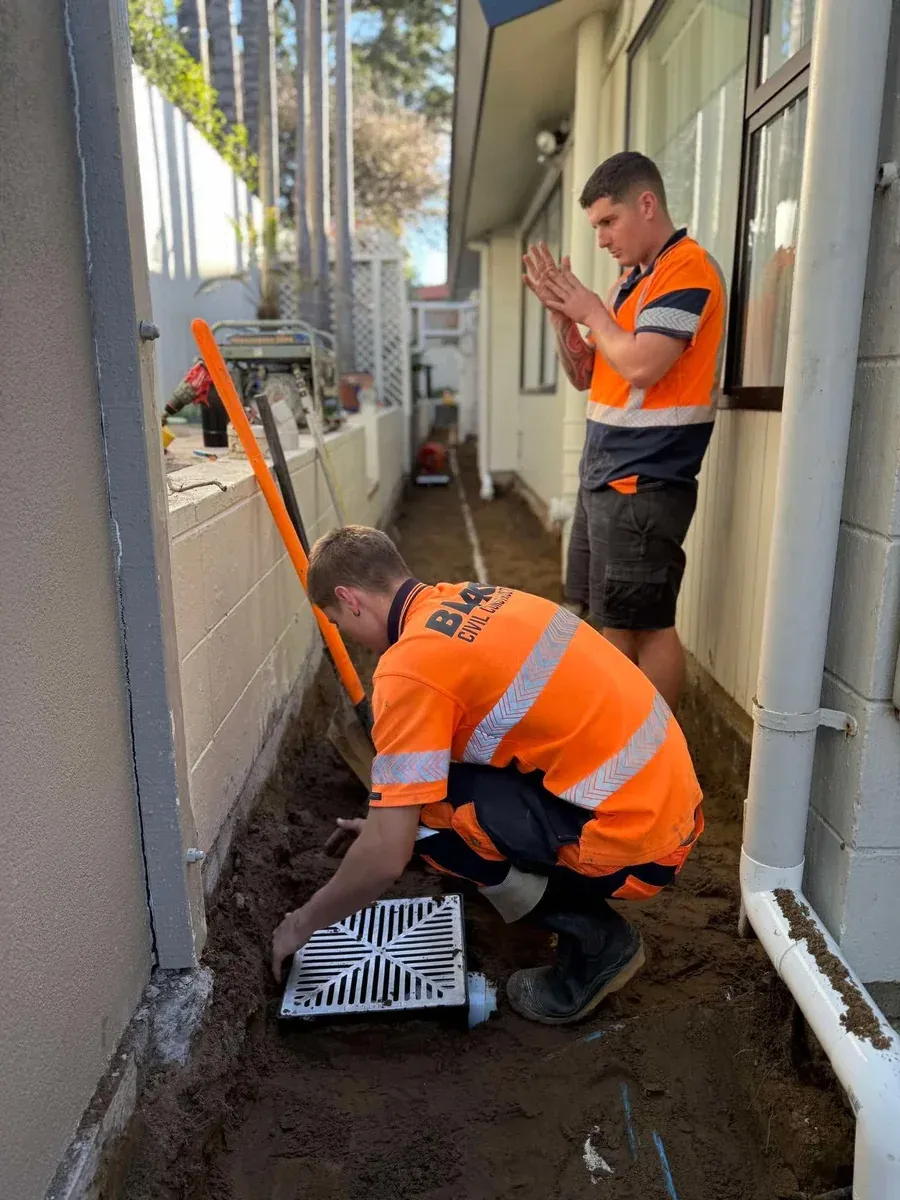
Drainage Systems in Auckland
Drainage system design and construction for Auckland properties, subsoil drains, channel drains, soak pits, and combined gravity-fed systems built for Auckland's clay soils and 1,200mm+ annual rainfall.
We're a family business based in Coatesville and our drainage system specialists have been designing and building drainage systems across Auckland for over 25 years. Waterlogged sections on heavy clay, surface flooding across driveways, damp foundations, wet paddocks, we install subsoil drains, channel drains, soak pits, and combined gravity-fed systems that move water off your property and keep it dry.
What are Drainage Systems?
A drainage system is a network of pipes, channels, and soakage devices that collects and redirects water away from buildings, foundations, and land surfaces. In Auckland, where Waitemata clay dominates most sections and annual rainfall pushes past 1,200mm, a drainage system designed for these conditions is the difference between a dry usable property and one that floods every winter. We design each system around your site's actual soil type, slope, water table, and council requirements, then build it with licensed drainlayers using materials rated for New Zealand ground conditions. Drainage system design and construction in Auckland must comply with New Zealand's freshwater management framework, which sets the environmental standards that govern how stormwater and wastewater is managed to protect waterways and groundwater.
- Subsoil drainage systems with perforated pipe, geotextile fabric, and gravel trenches for waterlogged sections
- Channel drain installation for driveways, patios, retaining walls, and hardstand areas
- Soak pit design and construction for on-site stormwater disposal in clay ground
- Combined gravity-fed drainage systems linking subsoil, surface, and stormwater networks
- Drainage system design for new builds, subdivisions, and existing properties with water problems
- Full council consent management and sign-off for all drainage system builds
Property owners in Kumeu, East Tamaki, and Mangere have called us in to fix drainage problems their previous contractors could not solve. Our licensed drainlayers have been working with Auckland's clay soils and high rainfall for 25+ years across the full region. We design for what the ground actually does, not what a standard spec assumes.
When You Need Us
When You Need Drainage Systems in Auckland in Auckland
Section Waterlogged After Every Rainfall
Lawn and garden turn into a swamp after rain because the clay holds water instead of letting it drain through. A subsoil drainage system with perforated pipe in gravel trenches collects the trapped groundwater and redirects it to a discharge point.
Surface Water Flooding Across a Driveway
Rainwater runs across the driveway and pools at the garage door or front entrance. Channel drains at the right fall intercept surface water before it reaches the building. The fix is getting the collection point right, not just moving the problem somewhere else.
Retaining Wall Showing Hydrostatic Pressure
Water building up behind a retaining wall pushes it forward. Subsoil drains behind the wall give that water somewhere to go before pressure builds. This is work that's much cheaper to do during wall construction than after the wall has started to move.
New Build Needs Full Site Drainage Design
A new home needs a drainage system designed from scratch, subsoil drains, stormwater connections, and surface drainage integrated into the building plans. We design the system around your actual site levels, soil type, and what council requires.
Older Home Built Without Subsoil Drainage
A lot of older Auckland homes were built without subsoil drains and now the foundations are damp or the lawn stays wet through winter. Retrofitting a perimeter drain system around the footings redirects groundwater before it reaches the structure.
Rural Property with Boggy Paddocks
Paddocks and access tracks stay wet for months because the clay underneath holds water. Agricultural subsoil drainage lowers the water table across the paddock, firms up the ground, and makes the land actually usable through the wet season.
Patio or Outdoor Area That Pools Water
A paved patio or entertaining area that drains toward the house. Channel drains at the right points intercept surface water before it reaches the building. Sometimes regrading is also needed to fix the fall direction permanently.
Subdivision Drainage Infrastructure
A new subdivision needs coordinated drainage across every lot, subsoil drains, stormwater mains, and on-site disposal sized and positioned to meet council requirements. We've designed and built subdivision drainage across Auckland, from Kumeu and East Tamaki to Mangere, and we know how to sequence this work into the broader development programme.
Our Process
Our Drainage Systems in Auckland Process
Blake Civil Construction follows a systematic approach for every drainage systems in auckland project.
Site Assessment and Soil Evaluation
We visit the property, assess the soil type and water table, and identify where water collects and where it needs to go. If the soil profile isn't clear from the surface, we dig test holes. Designing a drainage system for a site we haven't assessed properly leads to undersized soak pits and incorrectly spaced subsoil drains, problems that show up the following winter.
Drainage System Design
We design the system layout, pipe routes, fall gradients, drain types, and disposal points, matched to your site's actual conditions and council requirements. Not a standard design applied to every job. The slope of your land, the permeability of your soil, and the catchment areas all affect what the system needs to do.
Council Consent and Approvals
We prepare and lodge the required building consent or resource consent applications with Auckland Council and manage the approval process from application through to sign-off.
Trenching and Pipe Installation
Trenches get excavated to the design depth and grade. Geotextile fabric lines the trench, gravel bedding goes in, perforated pipe is laid to grade, and more gravel covers the pipe before the fabric folds over the top. Channel drains get set into concrete beds at the surface. Each element of the system goes in the right sequence.
Connections and System Integration
The drainage network connects to stormwater outlets, soak pits, or council mains, tying subsoil drains, channel drains, and stormwater components into one system with a single discharge point. A drainage system with unconnected sections that discharge in different directions doesn't work as a system.
Testing, Backfill, and Sign-Off
We test the system for flow and capacity, backfill trenches, reinstate surfaces, and arrange council inspection for final sign-off. Licensed drainlayers build to code every time, which is how we pass inspection without callbacks.
Need a Quote for Drainage Systems in Auckland?
Get in touch for a free, no-obligation quote on your project.
Why Choose Us
Why Choose Blake Civil for Drainage Systems in Auckland?
Subsoil, Channel, and Soak Pit, One Integrated System
We design drainage systems as connected networks, subsoil drains feeding into channel drains, soak pits handling the overflow, gravity connections tying everything to a single discharge point. Isolated drains that work independently and discharge in different directions create new problems. One integrated system solves the whole picture.
Geotextile Wrapping That Keeps Drains Working
Auckland's Waitemata clay clogs unprotected drainage within a few years. Fine clay particles migrate into unprotected gravel and block perforated pipe. Every drainage system we install uses geotextile-wrapped gravel trenches that prevent clay from silting up the system, keeping drains flowing for decades, not just the first wet winter.
Fall Gradients Calculated Per Site
Gravity-fed drainage only works when the fall is right. We calculate pipe gradients for each section based on actual ground levels, soil permeability, and the water volumes the system needs to handle. Not textbook numbers applied across the board, site-specific calculations that match what your property actually does in a storm.
Retrofitting Around Existing Buildings
Installing drainage on properties with existing houses, driveways, and gardens means careful machine work and planned trench routes. We retrofit perimeter drains and channel systems without damaging landscaping, paving, or structures already in place. It takes more planning than a new build site, but we do it regularly.
Licensed Drainlayers on Every Job
NZ law requires all drainage work to be carried out by a licensed drainlayer registered with the Plumbers, Gasfitters and Drainlayers Board. Every drainage system we install is built and signed off by licensed professionals. Legal, inspectable, and no problems when the property gets sold.
Waterlogged Ground to Dry Ground
We've been fixing waterlogged Auckland sections for over 25 years, perimeter subsoil drains around foundations that were never drained properly, agricultural drainage across paddocks that sit wet for five months of the year. We fix the water problem at the source. Not just put a channel drain somewhere visible and call it done.
Related Drainage Systems in Auckland Services
Blake Civil Construction provides services that complement our drainage systems in auckland expertise.
New Drainage Pipe Installation
New drainage pipe installation for residential and commercial properties.
On-Site Stormwater Detention
Stormwater detention, retention, and disposal systems for Auckland sites.
Rural Septic Tank Installation
Septic tank and on-site wastewater treatment for rural properties.
Site Excavation and Grading
Precision excavation and grading for level building sites and drainage falls.
Retaining Wall Drain Backing
New retaining wall construction for residential and commercial sites.
Drainage Systems in Auckland Coverage - Auckland Wide
Blake Civil provides professional drainage systems in auckland services across the greater Auckland region.
Our Coatesville base provides rapid response across Auckland for residential, commercial, and industrial drainage systems in auckland projects.
Contact Blake Civil for Professional Drainage Systems in Auckland
When your Auckland project requires professional drainage systems in auckland, Blake Civil Construction delivers the experience, equipment, and expertise to complete it properly.
43 Mill Flat Road, Coatesville 0793
Drainage system design and construction across greater Auckland, residential, rural, and commercial sites from our Coatesville base.
Family-owned, Coatesville-based. Licensed drainlayers building drainage systems for Auckland's clay soils since the late 1990s.
Explore More
Related Services
More services from our Drainage Contractors in Auckland category
Drainage Installation in Auckland
New drainage pipe installation across Auckland, from council mains connections to full on-site drainage networks. Licensed drainlayers, building consent managed, council sign-off included.
Septic System Installation in Auckland
Septic tank and aerated treatment system installation for rural and semi-rural Auckland properties. Fully consented on-site wastewater solutions with disposal fields designed for the soil conditions on your specific site.
Stormwater Management in Auckland
Stormwater detention, retention, and on-site disposal systems designed to meet Auckland Council SMAF requirements and handle high rainfall on clay-heavy sites.
Wastewater Management in Auckland
Wastewater pipe installation, sewer connections, on-site treatment systems, and subdivision wastewater infrastructure for residential, commercial, and rural properties across Auckland.
Ready to Start Your Next Project?
Contact Blake Civil Construction for expert earthworks services across Auckland. Our team is ready to discuss your project and provide a quote.