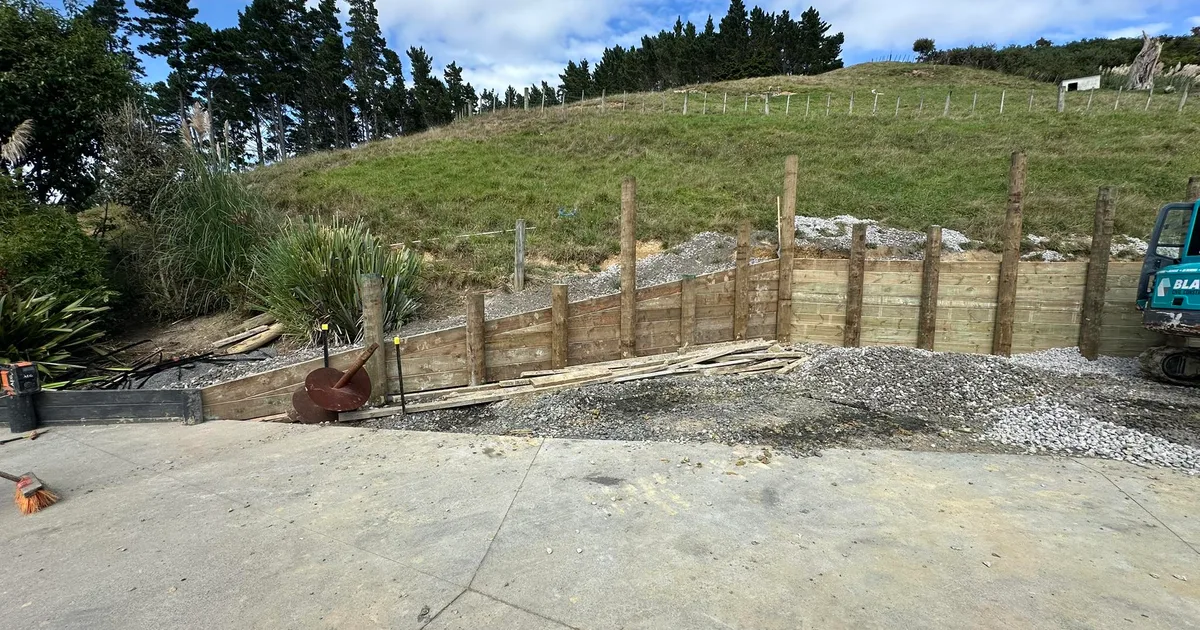
Walls under 1.5 metres with nothing heavy sitting above them are usually exempt, but there are catches. The decision tree below walks through every common situation.
If the wall is on a boundary or in a Special Character Area, there are extra rules on top. Same goes for properties in flood-hazard or stormwater overlay zones. The decision tree below covers all of that.
Why this question matters more than people think
Most homeowners assume the consent question is binary. Either you need one or you don’t. The actual rule is closer to a flowchart with five or six branches, and getting it wrong is expensive in three different ways.
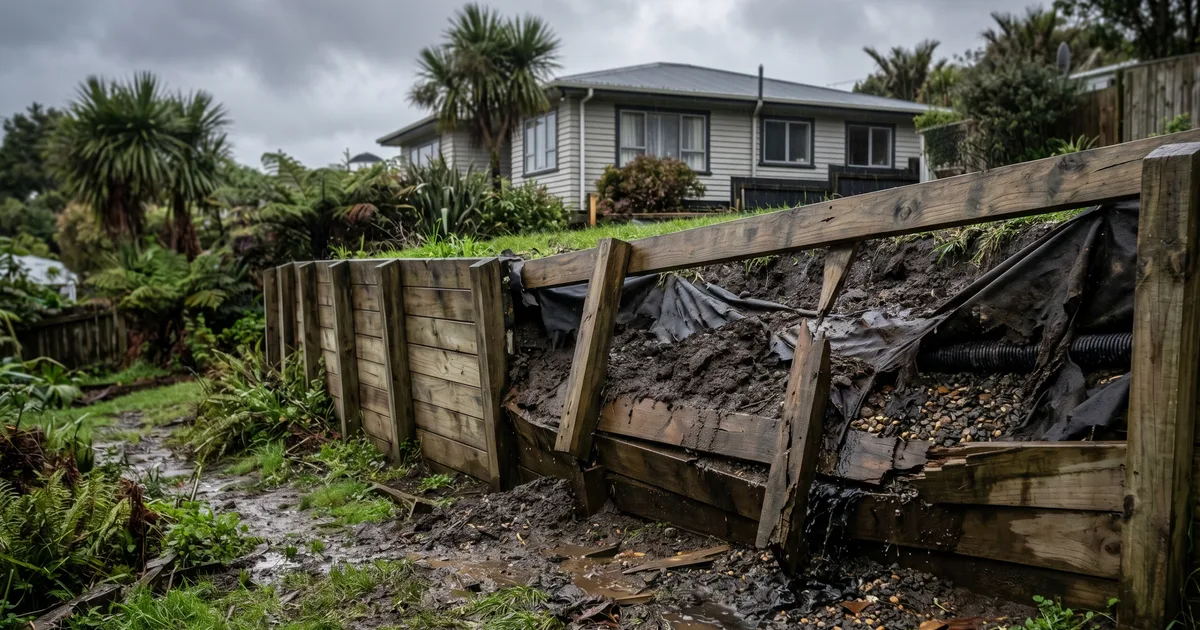
Build a wall that needed consent without one, and Auckland Council can issue a notice to fix or, in serious cases, an order to remove the wall entirely. This happens more often than people think. A contractor tells the homeowner “she’ll be right”, skips the paperwork, and the wall goes up without consent. The homeowner finds out at sale time, when the buyer’s lawyer asks for the Code Compliance Certificate that doesn’t exist. At that point, the options are a full rebuild with proper consent, or a price reduction that costs more than doing it right the first time.
The second cost is insurance. If a non-consented wall fails and damages your property, your house, or a neighbour’s section, your insurer can decline the claim on the basis that the structure wasn’t built to code. This comes up most often after wet winters, which Auckland is having more of.
The third cost is the next buyer. A property with un-consented building work shows up on a LIM report. The buyer’s solicitor flags it. The deal slows down or the price drops. Sometimes both.
The consent question isn’t a paperwork hurdle. It’s the thing that decides whether your wall is an asset or a liability the day after it’s built.
The two consent types you might need
There are two separate council processes and they cover different things.
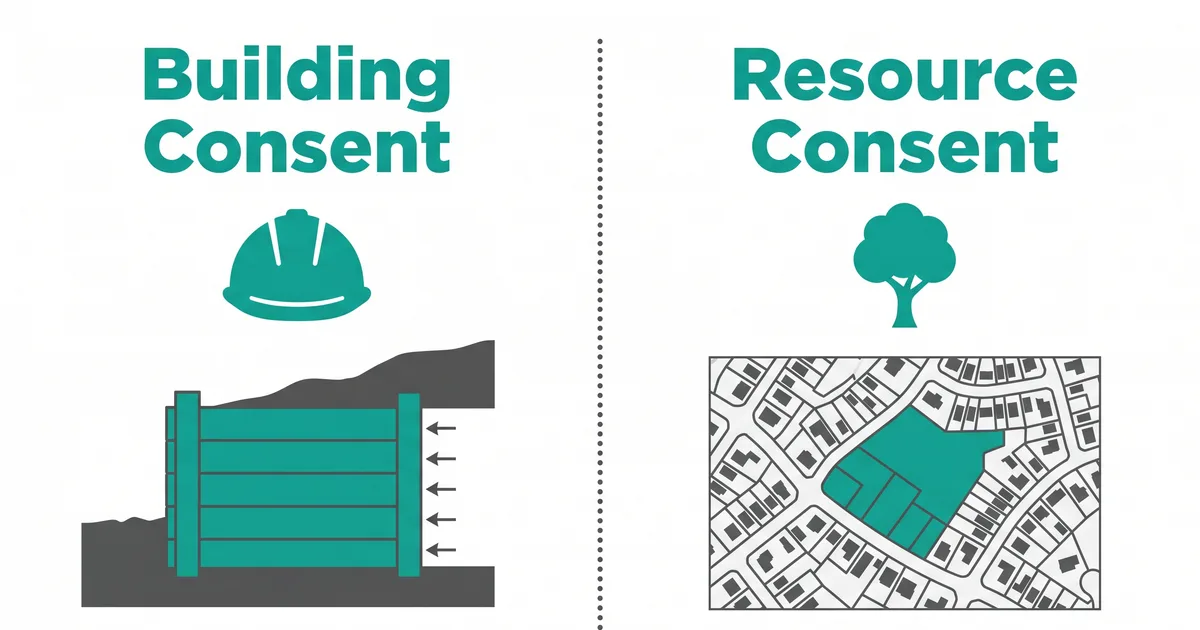
Building consent is the one you need most often for retaining walls. It’s about whether the wall is structurally safe and built to the New Zealand Building Code. Auckland Council’s Building Control team handles this.
Resource consent is about land use rules in your specific zone (Single House, Mixed Housing Suburban, Mixed Housing Urban, etc.) under the Auckland Unitary Plan. You’d need this if your wall affects something the plan protects, like a heritage feature, a stream margin, a significant tree, or an overland flow path. Most residential retaining walls don’t trigger resource consent. The ones that do tend to be on coastal sections, flood-prone properties, or in Special Character Areas like Devonport or Grey Lynn.
This article is mostly about the building consent question, which is what affects 95% of homeowners. Resource consent is covered at the points where it matters.
The Decision Tree
Work through these in order. Stop when you hit your situation.
Question 1: How tall is the wall, measured from the lowest exposed ground level to the top?
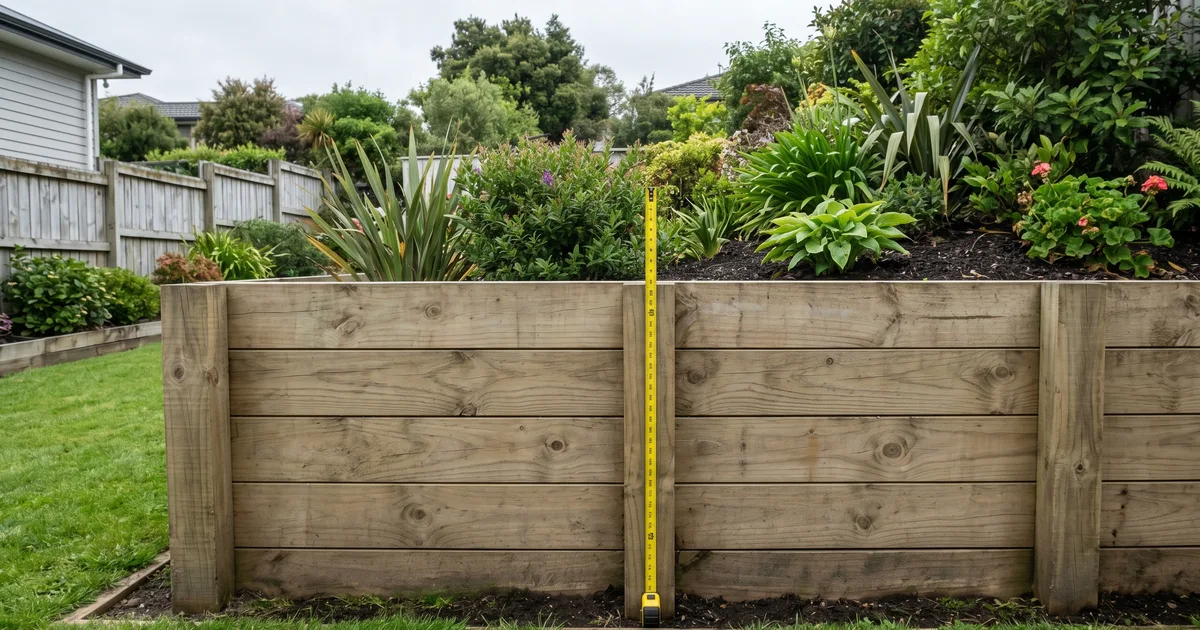
- Under 1.5 metres → Go to Question 2.
- Between 1.5 and 3 metres → You need building consent. Engineering required. There is one narrow exemption (Schedule 1, Exemption 41) that allows walls up to 3 metres without consent in rural zones if the design is reviewed by a Chartered Professional Engineer, but this rarely applies on standard urban or suburban Auckland sections. Assume consent is required and ask us if you think you might fall under the rural exemption. Skip to “What happens next” at the bottom of the article.
- Over 3 metres → Building consent plus engineering plus probably resource consent depending on your zone and what’s behind it. Definitely call us before you do anything else. These get complex fast.
The 1.5 metre measurement is from the lowest point of finished ground in front of the wall up to the top of the wall. Not from the back. Not from the average. The lowest exposed face. Auckland Council inspectors measure it that way and so should you.
Question 2 (only if your wall is under 1.5 metres): What’s loading the back of the wall?
This is where most homeowners get tripped up. The wall might be short, but if it’s holding back something heavy, the consent rules change.
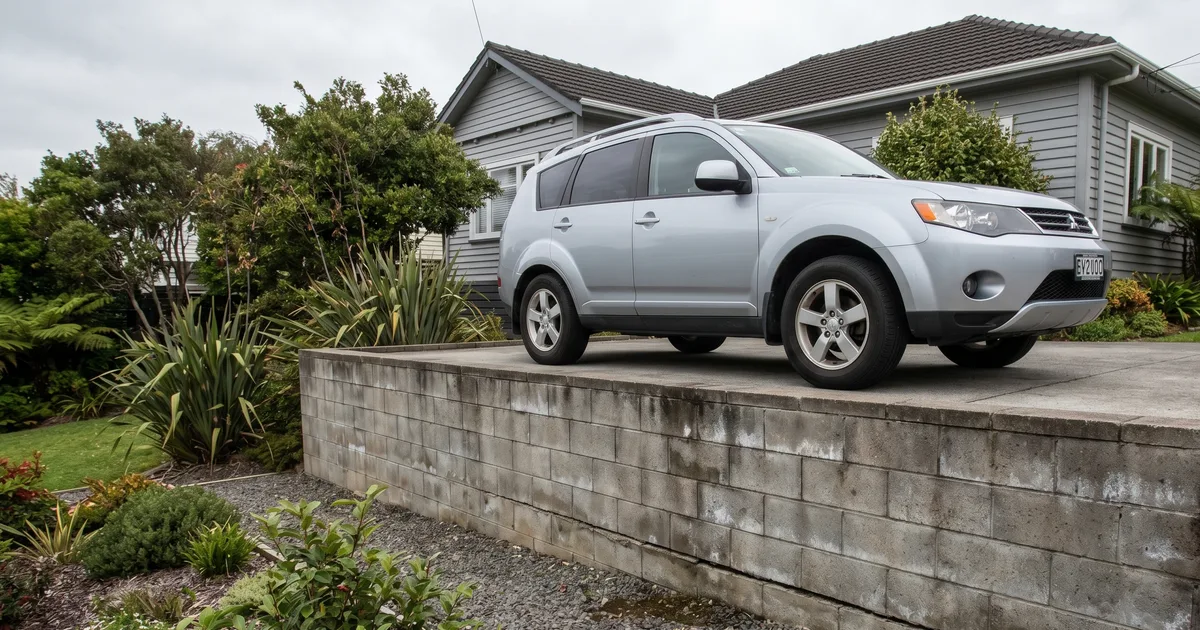
- Nothing. Just garden, lawn, or natural slope behind it, no buildings, no driveway, no cars parked above, no neighbour’s section sitting higher. → Go to Question 3.
- A driveway, parking pad, or anywhere a car drives or parks above the wall. → Building consent required, even if the wall is well under 1.5 metres. This counts as a surcharge load. The wall has to be engineered to handle the force a car puts on the soil above it.
- A building, deck, garage, shed, or any permanent structure within a fall zone (rule of thumb: within a horizontal distance equal to the wall’s height). → Building consent required.
- A slope rising away from the wall at more than about 25 degrees, or another retaining wall above this one (terraced walls). → Building consent required. Stacked walls behave like one tall wall under load.
- A neighbour’s section that’s noticeably higher than yours, or a public footpath/road above. → Building consent required. You’re carrying load you don’t own. Council and your neighbour both want this engineered.
Question 3 (only if no surcharge load): Is the wall on or near a boundary?
- The wall is fully on your land, more than 1 metre from the boundary. → Go to Question 4.
- The wall is on the boundary, or within 1 metre of it. → Even without a building consent requirement, you typically need your neighbour’s written agreement before you build it. Some boundary walls also fall under the Fencing Act, which is a different framework again. Talk to us before you start, because the legal side here is messier than the build itself.
Question 4: Is your property in a flood-hazard zone, an overland flow path, or a SMAF stormwater overlay?
You can check this on Auckland Council’s GeoMaps tool. Search your address, then look at the planning layers.
- No, none of those. → Most likely no consent needed. Your wall is short, lightly loaded, and not in a sensitive zone. You can almost certainly proceed under the Schedule 1 building work exemptions of the Building Act, which allow non-load-bearing retaining walls under 1.5 metres without consent.
- Yes to any of those. → Get advice before you build anything. The wall might still be exempt, but the ground around it has rules that apply regardless of wall height. Putting a structure into a flow path can change how water moves across multiple properties. You don’t want to be the homeowner who flooded the neighbours.
Special situations worth flagging
A few things that don’t fit the decision tree cleanly but come up often.
Replacement walls. If you’re rebuilding an existing wall in the same location, same height, same material category, you might be able to do it under the “like-for-like” exemption. Might. Auckland Council has tightened how it interprets this in the last two years, so don’t assume. The exemption disappears the moment you change the wall type (say, swapping an old timber wall for a Keystone block system), increase the height, or move the line.
Heritage and Special Character Areas. Devonport, Parnell, Grey Lynn, parts of Mt Eden and Mt Albert, plus a handful of other suburbs, are covered by Special Character zone rules in the Auckland Unitary Plan. Even small retaining walls in these areas can need resource consent on top of the building consent, particularly if they’re visible from the street.
If you’re in a Special Character Area, don’t assume the normal exemptions apply. Even small walls visible from the street can trigger resource consent.
Coastal properties and the Coastal Erosion Hazard Area. Anything on the seaward side of the coastal hazard line gets extra scrutiny. Don’t start without checking.
Walls on shared driveways or cross-leases. The legal title sometimes restricts what owners can build without the other titleholders’ agreement. This is a lawyer question, not a contractor question, but it’s worth raising before you spend money on engineering.
What “you need consent” actually involves
If your wall does need building consent, here’s the rough sequence so you know what you’re signing up for.
- Engineering design. A structural or geotechnical engineer specifies the wall to suit your soil, slope, surcharge, and water table. PS1 (design Producer Statement) is provided at this stage; PS4 (construction review) follows once the wall is built.
- Consent application lodged with Auckland Council. The property owner signs off on the documentation. The statutory target is 20 working days for straightforward residential applications, but actual processing has been running longer through 2025 and into 2026, particularly when requests for further information come back. Plan for 4 to 6 weeks rather than 4 weeks flat.
- Construction, with inspections at the points the engineer specifies (typically pre-pour or pre-backfill, depending on wall type). If you want to understand what the installation process actually looks like on site, we’ve covered that separately.
- Final inspection and Code Compliance Certificate (CCC). The CCC is the document the next buyer’s lawyer wants to see. Without it, the work shows up as a LIM defect.
A note on the contractor who tells you “she’ll be right”
If you get a quote from a contractor who says you don’t need consent for a wall that this article says you do, get a second opinion before you sign anything. The wall might go up fine. The bill at sale time, or after a wet winter, doesn’t.
Cheap retaining wall quotes are usually cheap for one of three reasons. Skipping consent is one. Skipping engineering is another. Skipping drainage is the third, and the one that sinks more walls than the other two combined.
All three save money on day one and cost money for the next 30 years.
Any contractor worth hiring should be quoting proper drainage behind the wall, and managing consent as part of the job if it’s required. If neither of those things are in the quote, that’s a red flag.
When in doubt: ask before you start
Auckland Council’s Duty Building Officer line takes pre-application questions and they’ll usually give you a direct read on whether your specific situation needs consent. The number rotates so check the current contact through Auckland Council’s building and consents team. For the national picture, Building Performance’s guide to whether you need consent explains the exemption thresholds that apply to structures like retaining walls. Building Performance’s overview of resource consents also covers when a resource consent is triggered on top of building consent, which is worth understanding before you start.
If your wall is failing, leaning, or cracking and you’re not sure whether it’s a repair or a rebuild, see our retaining wall repair page. If you know you need a new wall and want to understand the options, start with our retaining wall services page.
Need a site assessment?
Blake Civil Construction is based in Auckland and handles retaining wall projects across the region, including consent management and engineering coordination.
Call 0508 4 BLAKE or get in touch for a free site assessment.