If you are planning drainage work in Auckland, one of the first questions worth sorting out is who is actually allowed to do it. Drainage is not always just a plumber job, and it is not always a job you can do yourself. Some work needs a licensed drainlayer, and some of it needs council inspection and sign-off before it can be covered up.
This trips a lot of people up. You might assume a plumber handles everything water-related, or that a digger operator can just lay some pipe while they are on site. Sometimes that is fine. Often it is not, and getting it wrong means rework, failed inspections, or problems that only show up later when you try to sell the property.
This article explains in plain terms when you need a licensed drainlayer, how drainlaying differs from plumbing, and where a civil contractor fits in. The aim is to help you plan the work properly before anyone breaks ground.
Quick Answer: When Do You Need a Licensed Drainlayer?
As a general rule, the following types of work usually need a licensed drainlayer, and in many cases council involvement:
- New drains being laid
- Alterations or extensions to an existing drainage system
- Stormwater connections (getting roof and surface water away from the building)
- Wastewater connections (foul water from the house to the public sewer or onsite system)
- Drainage for a new build, before and around the slab or foundations
- Drainage as part of a subdivision or new lot
- Connecting to a public network or council main
Lower-risk maintenance, like clearing a blockage or replacing a gully trap, may sit in a different category. But the moment you are creating new drainage or changing how the system works, you are usually in licensed-drainlayer territory.
The wording here is deliberately cautious, because the rules depend on the specific job and the site. The reliable move is to get the work assessed rather than guess. If you want that done properly, Blake Civil’s drainage team can tell you what the scope actually involves before anything starts.
Drainlayer vs Plumber vs Civil Contractor
These three roles overlap in people’s minds, but they do different work. Understanding the difference helps you call the right person the first time.
Plumbers
Plumbers generally deal with the water inside and immediately around the building: taps, hot water, internal pipework, fixtures, and emergency issues like a burst pipe or a leak under the sink. If your problem is inside the house, a plumber is usually who you want.
Drainlayers
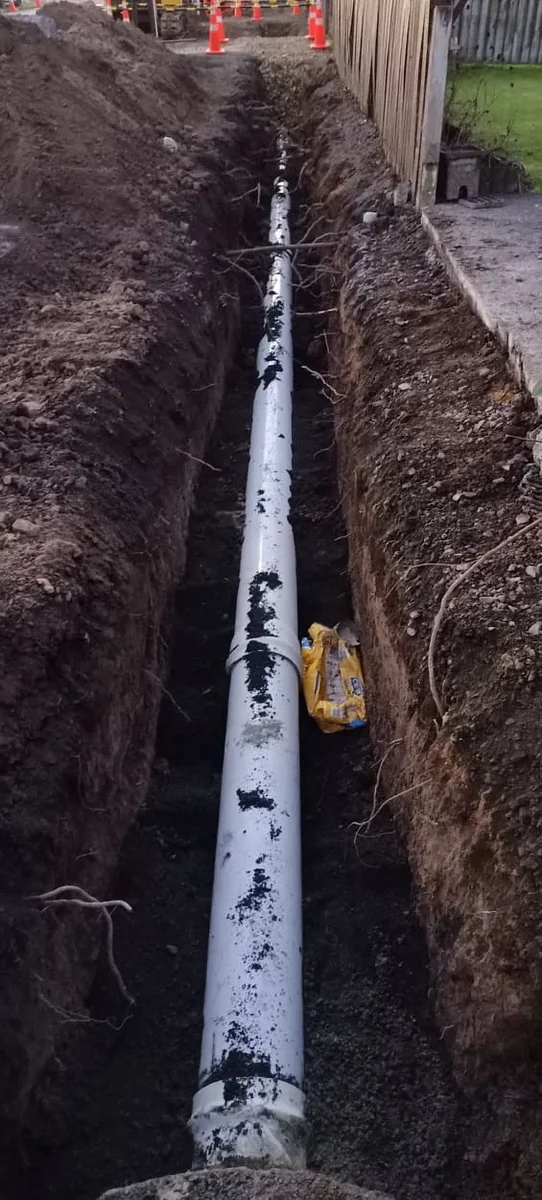
Drainlayers handle the underground drainage system: the pipes that carry wastewater away from the building and the stormwater pipes that move surface and roof water off the site. This is the buried network that connects your property to the public system or to an onsite solution. New drains, connections, and alterations to that network are drainlaying work.
Civil contractors
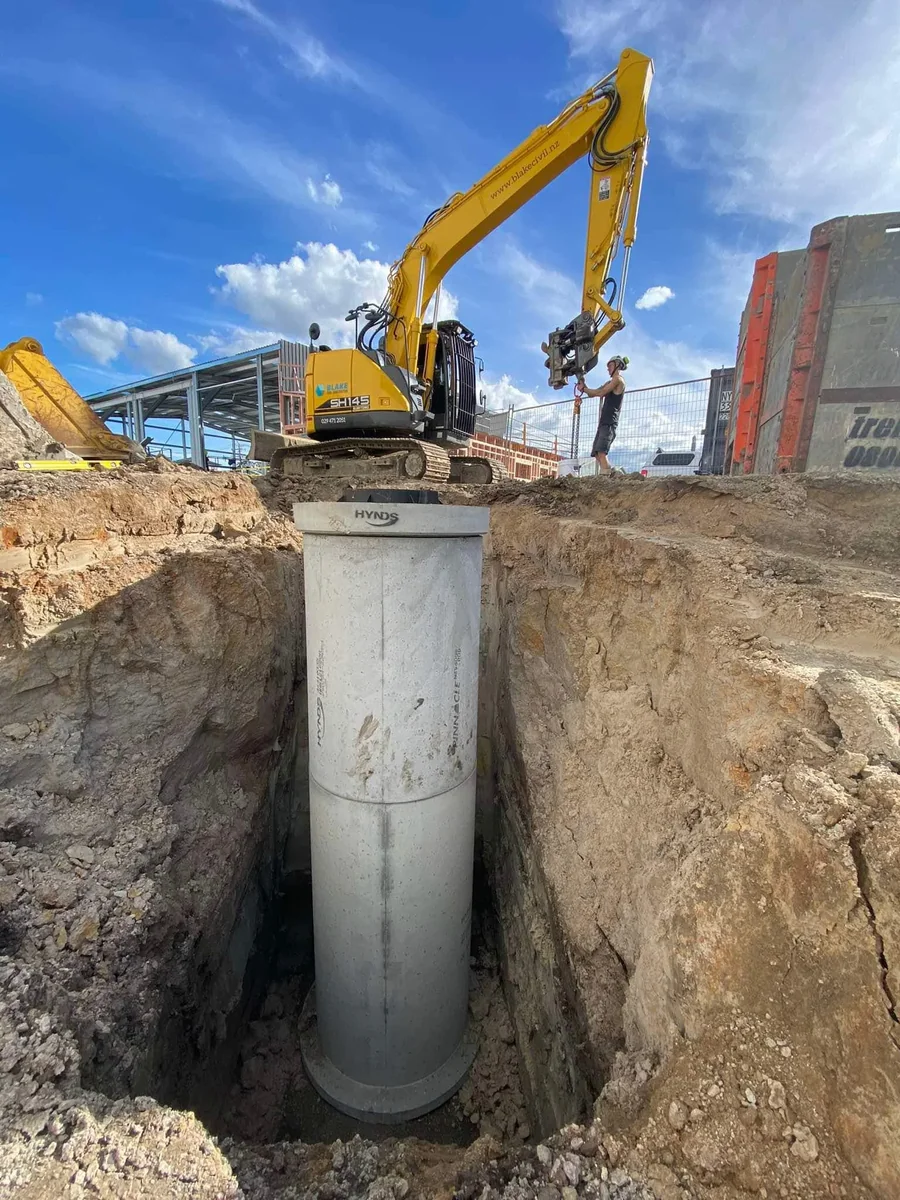
A civil contractor coordinates drainage as part of the bigger site picture. On a new build, a subdivision, or any job involving earthworks, the drainage has to be installed alongside excavation, trenching, bedding, compaction, and backfill, and it has to line up with where the slab, driveway, and services are going. That coordination is where a civil contractor earns their keep.
Blake Civil sits firmly in that civil-grade space. The focus is site-based drainage tied to new builds, stormwater systems, wastewater connections, subdivisions, and earthworks, not the blocked-sink or emergency-plumbing end of the trade. If your job involves a digger, a site, and a drainage network being built or altered, that is the work Blake Civil is set up for.
New Build Drainage
On a new build, drainage is one of the early jobs that everything else depends on. The stormwater and wastewater runs usually need to go in before or around the slab, because once the concrete is poured, those pipes are locked in place.
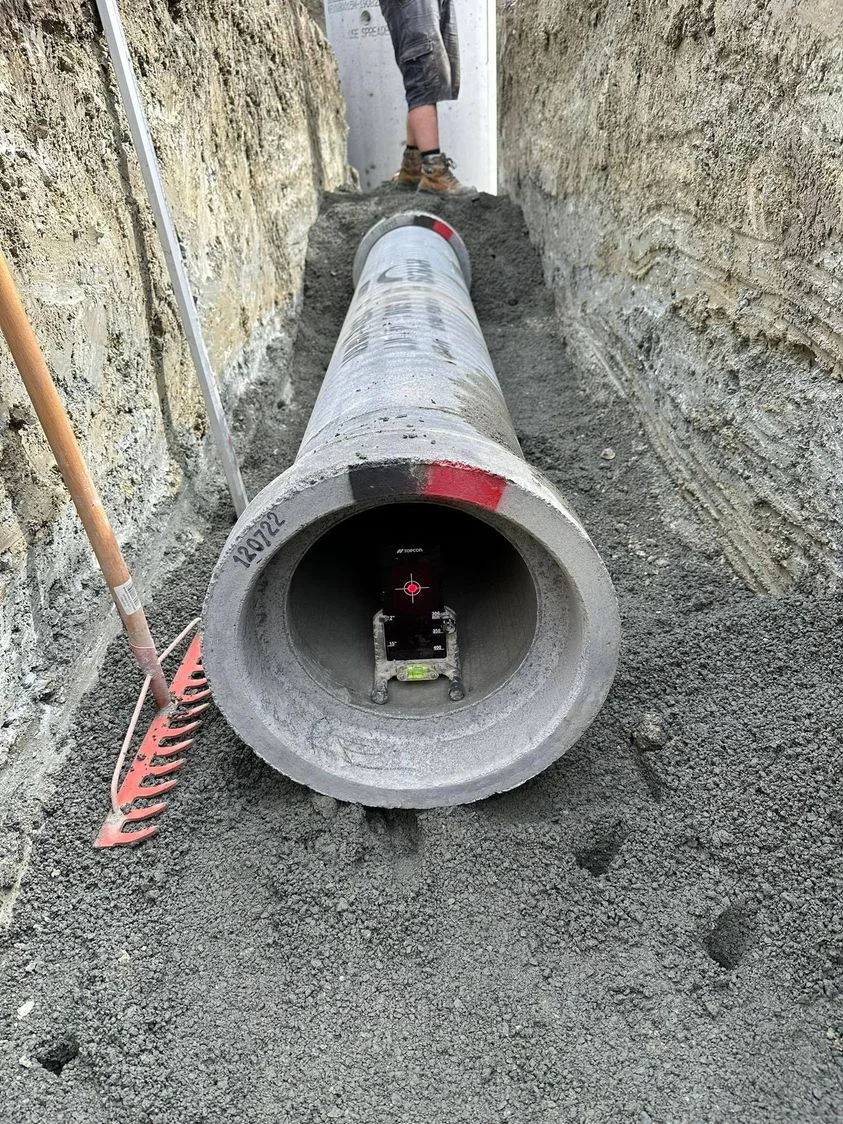
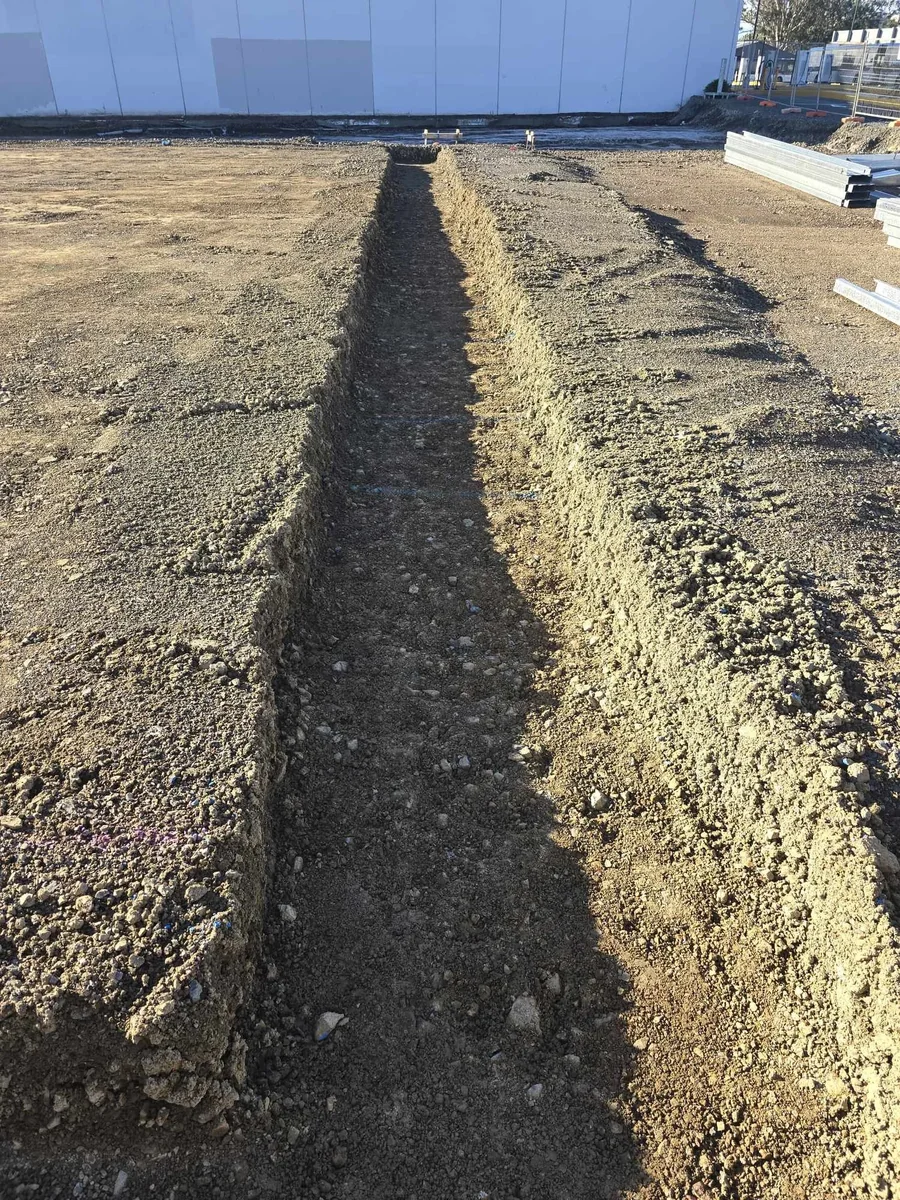
Getting this right means coordinating several things at once: the excavation and trenching, the bedding the pipe sits on, the correct fall so water actually flows, the connection points to the public system, and the inspections that may need to happen before the trench is backfilled. Miss a step or get the fall wrong, and the fix later can mean breaking out concrete or re-excavating finished ground.
This is exactly the kind of work that benefits from being planned alongside the rest of the site works rather than treated as a standalone task. Blake Civil handles drainage installation as part of the build sequence, and ties it in with site preparation and earthworks so the drainage and the ground work are coordinated rather than fighting each other.
Stormwater and Wastewater Connections
Two separate systems, two different jobs, and both need to be done properly.
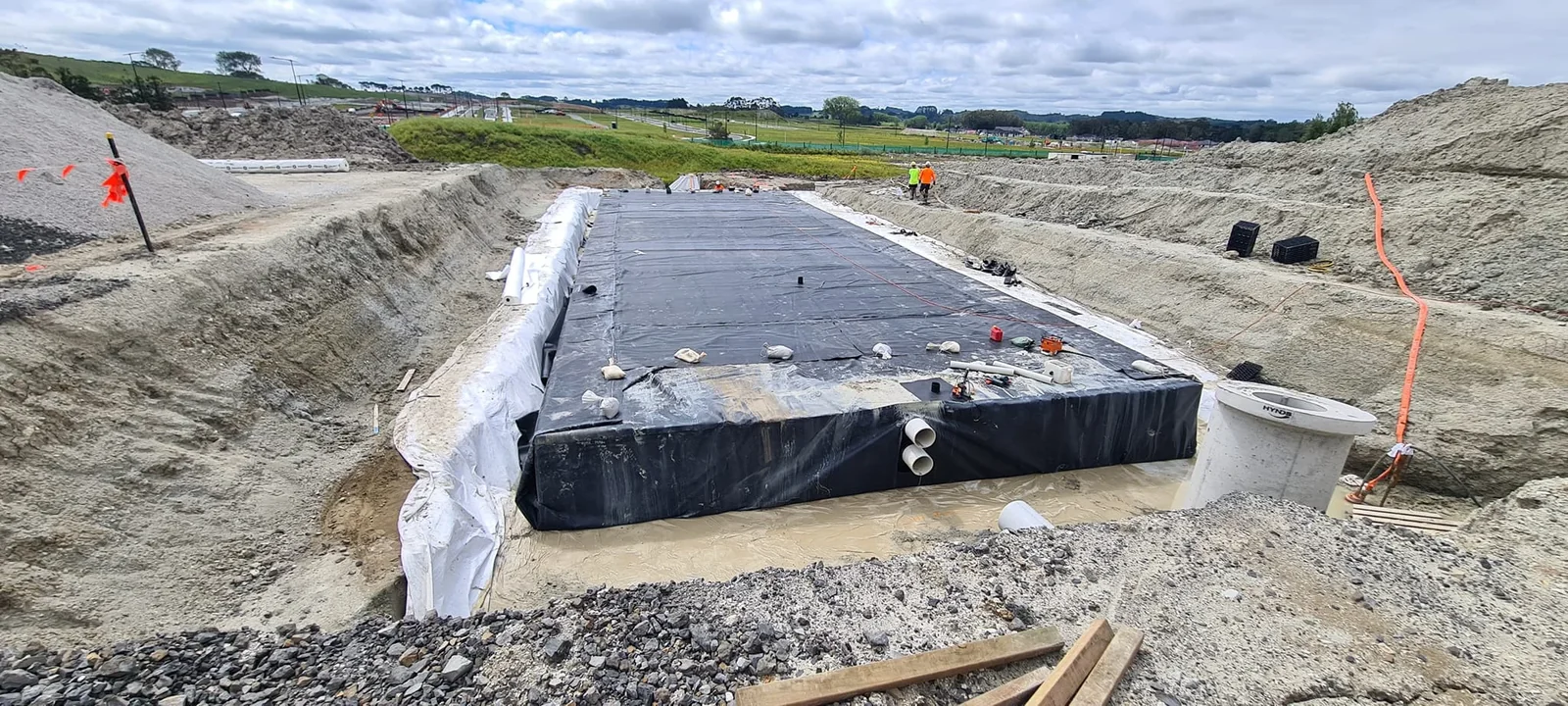
Stormwater is the rain: roof water, surface water, and runoff that needs to be moved off the site and into the public stormwater network or an approved discharge point. Get it wrong and you end up with ponding, water sitting against foundations, or runoff going where it should not.
Wastewater is the foul water from the house: toilets, kitchen, bathroom, laundry. It connects to the public sewer or, on some sites, to an onsite wastewater system. Wastewater connections are tightly controlled because the consequences of getting them wrong are serious.
Both rely on the same fundamentals: correct fall so water flows by gravity, sound connection points, the right discharge location, and inspection where required. The specific requirements depend on the site and what the council network can accept, so this is not something to assume. It is worth confirming what is involved before committing to a layout. Blake Civil covers stormwater management and the wider drainage systems side as part of planning a site properly.
Council Inspection and Sign-Off
Depending on the scope, drainage work may need council inspection at certain stages, and sign-off before the trench is backfilled or the system is put into use. The point of inspection is to confirm the work meets the required standard while it can still be seen, because once it is buried, checking it means digging it back up.
The exact requirements depend on the job and the site, so this is one of those areas where it pays to check with the council or have your contractor confirm what applies rather than assume. What matters from a planning point of view is that inspections take time and need to be booked into the programme. If nobody allows for them, the job can stall at the worst moment, with an open trench and a build waiting on it.
Planning the inspection points in advance is one of the simple things that keeps a drainage job moving instead of stopping it dead halfway through.
Why Poor or Unconsented Drainage Work Creates Problems Later
Drainage is mostly buried, which makes it easy to cut corners on and hard to inspect after the fact. That is exactly why poor work tends to come back to bite.
The common problems show up in a few ways:
- Sale and compliance issues. Drainage that was done without the right consent, inspection, or sign-off can become a headache at sale time, when a buyer’s lawyer or building report starts asking for paperwork that does not exist.
- Rework costs. Fixing buried drainage means excavating it back out, which is far more expensive than doing it right the first time. The cheap job often becomes the expensive one.
- Blockages and ponding. Pipe laid with the wrong fall, poor connections, or no fall at all leads to standing water, slow drainage, and recurring blockages.
- Water near foundations. Stormwater that is not moved off the site properly can end up sitting against the building, which is a problem on Auckland clay where ground movement and water do not mix well. This is the same hydrostatic pressure issue that causes retaining walls to fail on clay sites.
- Damage to finished surfaces. When buried drainage has to be dug up, the driveway, paths, or landscaping above it often get sacrificed in the process.
None of this is meant as a scare. It is just the practical reason that drainage is worth planning and doing properly, by someone set up for the work, rather than treating it as an afterthought.
When Blake Civil Is the Right Fit
Blake Civil is a good fit when the drainage is part of a real site job rather than a quick internal plumbing fix. That includes:
- New builds needing stormwater and wastewater before the slab
- Site drainage tied to earthworks, access, or finished levels
- Stormwater systems for residential and small commercial sites
- Subdivisions and small developments needing new drainage runs
- Drainage that works alongside retaining walls or sloped ground
- Civil-grade jobs where access, plant, and coordination actually matter
If your situation is a blocked drain inside the house or an emergency plumbing leak, an emergency plumber is the faster call. Where Blake Civil adds value is on the planned, site-based, civil-grade drainage where the digging, the levels, the connections, and the coordination all have to come together.
Talk to Blake Before You Dig
The cheapest time to get drainage right is before anyone starts digging. Once the trench is open or the slab is down, your options narrow and your costs climb.
If you are planning drainage work in Auckland, the best next step is a site assessment. When you get in touch, it helps to have:
- The site address or suburb
- Any plans, drawings, or photos of the area
- A description of the drainage issue or what you are trying to build
- The stage the project is at (planning, consent, earthworks, build)
- Your rough timeframe
Blake Civil can assess the site, work through the stormwater and wastewater requirements, access, earthworks, and council inspection needs, and plan the job properly before work starts.
Call 0508 4 BLAKE or get in touch through the contact form to talk through your drainage project before you dig.