If you own a property in Auckland, you have probably watched water sit on the lawn after a heavy downpour and wondered why it takes so long to clear. The answer usually comes down to three things working against you: Auckland gets a lot of rain, much of the city sits on clay, and a lot of sections are sloped or tight. Put those together and stormwater has nowhere quick to go.
The frustrating part is that there is no single fix that works for every property. The right solution depends on where the water is coming from and, just as importantly, where it can legally and safely go. This article walks through the common stormwater problems we see on Auckland clay sites, why they happen, and what actually needs to be sorted before anyone starts digging.
This is a practical guide to understanding the problem, not a prescription for your specific site. If water is causing issues on your property, the right first step is getting it assessed.
Quick Answer: Auckland Stormwater Problems Are Usually Site-Specific
There is no off-the-shelf fix for stormwater on an Auckland clay section. What works on one property can be the wrong call next door.
The solution depends on a stack of factors that vary site to site:
- The soil type and how well (or badly) it drains
- The slope and fall across the property
- How much runoff is coming off the roof, driveway, and hard surfaces
- What drainage already exists and whether it is connected properly
- Council requirements for the property and catchment
- Where the water can actually discharge to
That last point catches a lot of people out. You can have the perfect drainage design on paper, but if there is nowhere safe and legal to send the water, the plan does not work. This is why a proper stormwater management approach starts with assessing the site, not selling you a product.
Why Clay Soil Causes Drainage Problems
Most of Auckland’s residential land sits on Waitemata Group clay. It is the single biggest reason stormwater behaves the way it does here.
Clay is made up of very fine particles packed tightly together. Water cannot move through it quickly the way it moves through sandy or volcanic soils. So when it rains hard, water either sits on the surface or soaks in slowly and then has nowhere to go. On a free-draining site, a downpour clears in an hour or two. On clay, the same rain can leave the ground wet for days.
A few things make it worse:
- Compacted ground. Foot traffic, vehicles, and construction press the clay down even tighter, which slows drainage further. New builds are especially prone to this because heavy machinery compacts the ground during the build.
- Poor fall. If the ground does not slope away from where water collects, gravity is not helping you. Water pools in the low spots.
- Saturation. Once clay is fully wet, it stops absorbing anything. Every additional millimetre of rain just runs off or sits on top.
The visible results are the things property owners actually notice: wet lawns that never dry out, slippery and boggy access, water creeping toward foundations, and added pressure against retaining walls. These are symptoms of the same underlying issue, which is water that cannot drain away fast enough and has nowhere to be redirected.
Common Stormwater Issues Blake Civil Sees
Across Auckland clay sites, the same problems come up again and again. If any of these sound familiar, it is worth understanding what is likely driving it.
Surface water sitting after rain
Ponding on the lawn, paths, or paved areas is the most common complaint. It usually means water has nowhere to drain and the ground is not shedding it. On clay, this can persist long after the rain stops.
Boggy lawns and wet sections
A patch of ground that is permanently soft, muddy, or waterlogged often points to water collecting underground rather than just on the surface. This is frequently a subsoil drainage issue, where water is sitting in the ground itself and needs to be intercepted and carried away.
Driveway and hard-surface runoff
Driveways, patios, and concrete shed large volumes of water fast because nothing soaks in. If that runoff is not captured and directed somewhere, it ends up flooding the lawn, pooling at the bottom of a slope, or running toward the house.
Water near foundations
Water collecting against or near the foundations is the issue worth taking most seriously. Persistent moisture around the base of a building can cause problems over time, and it usually means stormwater is being directed the wrong way or not being captured at all.
Retaining wall drainage pressure
On clay, water trapped behind a retaining wall builds up hydrostatic pressure and pushes against the structure. If a wall is leaning, cracking, or weeping water, the drainage behind it may have failed, which is often a retaining wall repair matter as much as a wall one.
Overflowing or poorly connected stormwater systems
Sometimes the system is there but not working. Gutters, downpipes, and stormwater lines that are undersized, blocked, disconnected, or poorly laid can overflow during heavy rain and dump water where it is not wanted.
Stormwater Around New Builds and Renovations
If you are building or renovating, stormwater is one of the things easiest to leave too late and most expensive to fix afterward.
Drainage should be planned and sorted before the slab goes down, before driveways and paving are poured, before landscaping is finished, and before retaining walls are built. Once those surfaces are in, retrofitting drainage often means cutting into new concrete, lifting paving, or digging up landscaping that was just completed. That is rework nobody wants to pay for.
The reason it gets missed is that drainage is invisible when it works. It is tempting to focus the budget on the things you can see and treat drainage as an afterthought. But on an Auckland clay site, getting the drainage installation right early is what protects everything built on top of it. Water that is managed properly from the start does not undermine slabs, soften ground under driveways, or load up retaining walls.
For builders and developers, this is a coordination issue as much as a technical one. Drainage, earthworks, and the build sequence all need to line up. Getting a civil team to look at the site before the build progresses usually saves money and avoids the awkward conversation later when water shows up where it should not.
Possible Drainage Solutions
There are several ways to deal with stormwater on a clay site. The point of listing them is not to pick one for you, because the right combination depends entirely on the site. It is to show that drainage is rarely one single thing.
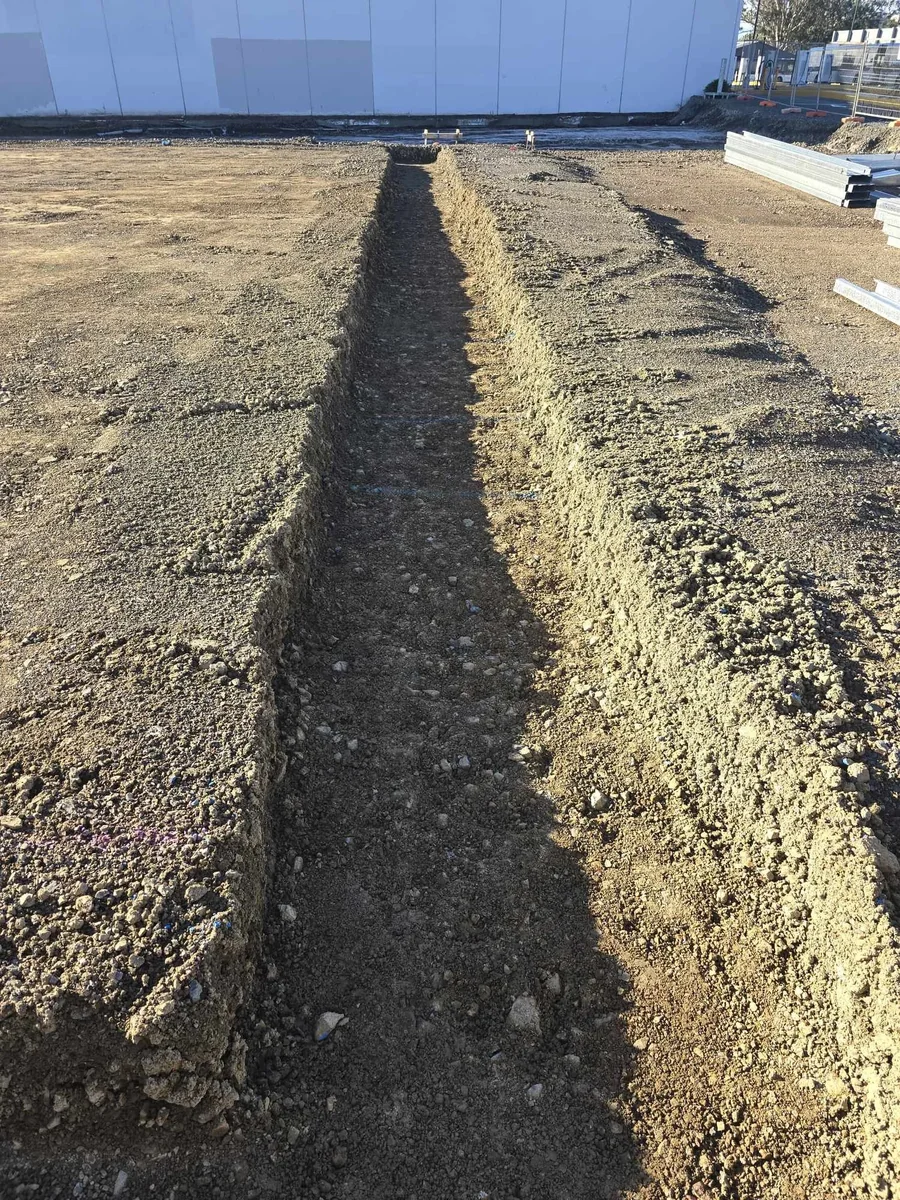
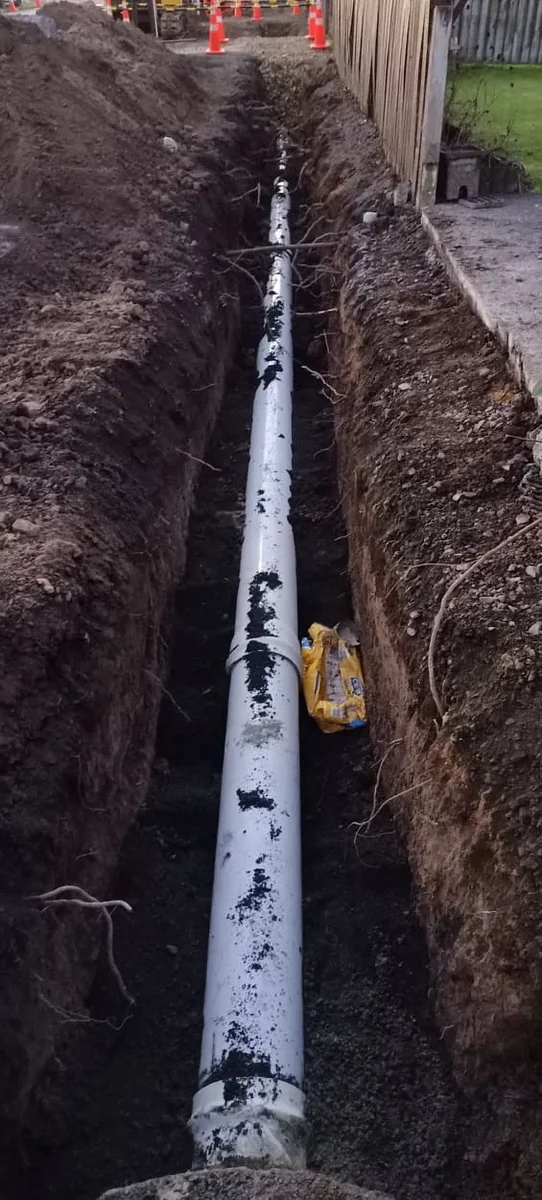
- Subsoil drainage. Perforated pipe laid in gravel below ground to intercept water sitting in the soil and carry it away. Useful for boggy lawns and saturated ground.
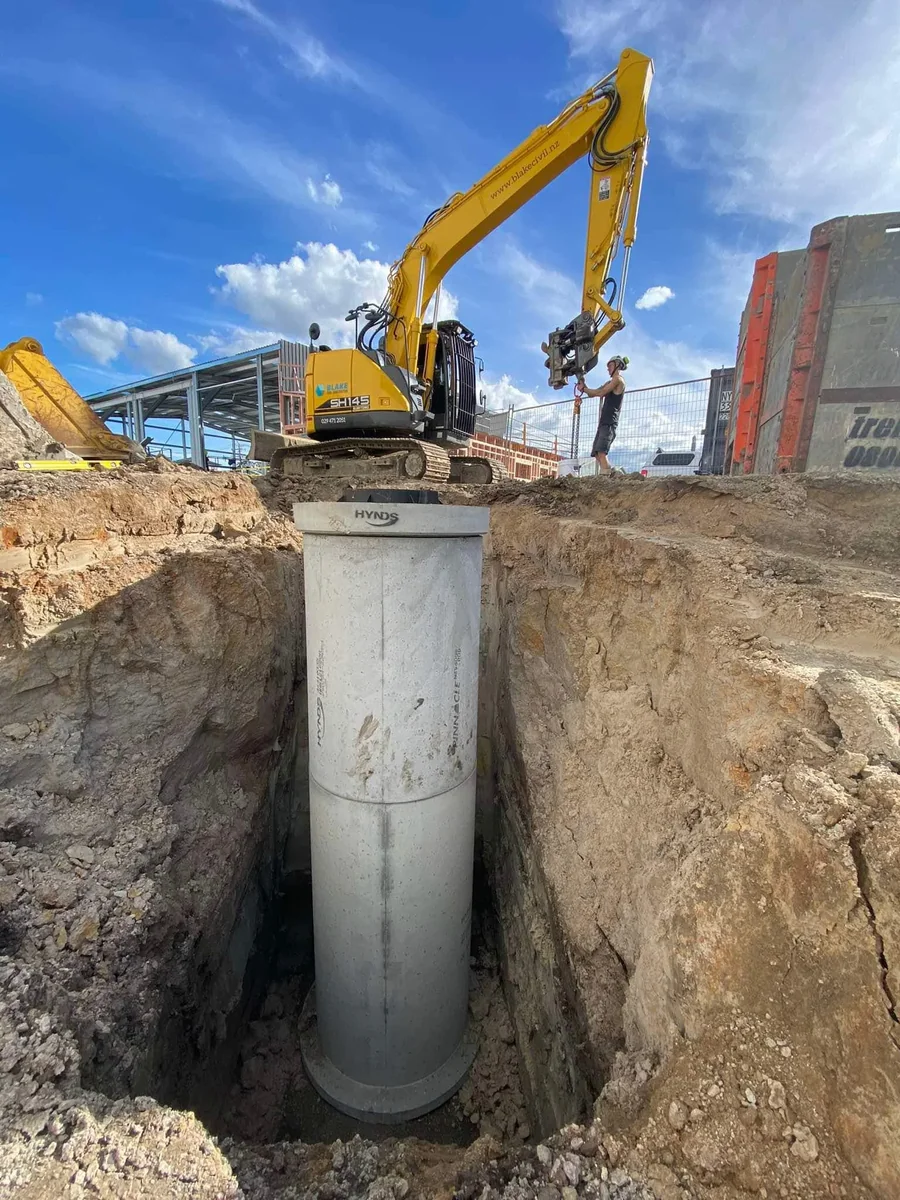
- Stormwater lines and connections. Pipes that capture and carry surface and roof water to an approved discharge point, properly connected so they do not overflow.
- Channel drains. Surface channels across driveways, paths, and entrances that catch runoff before it spreads.
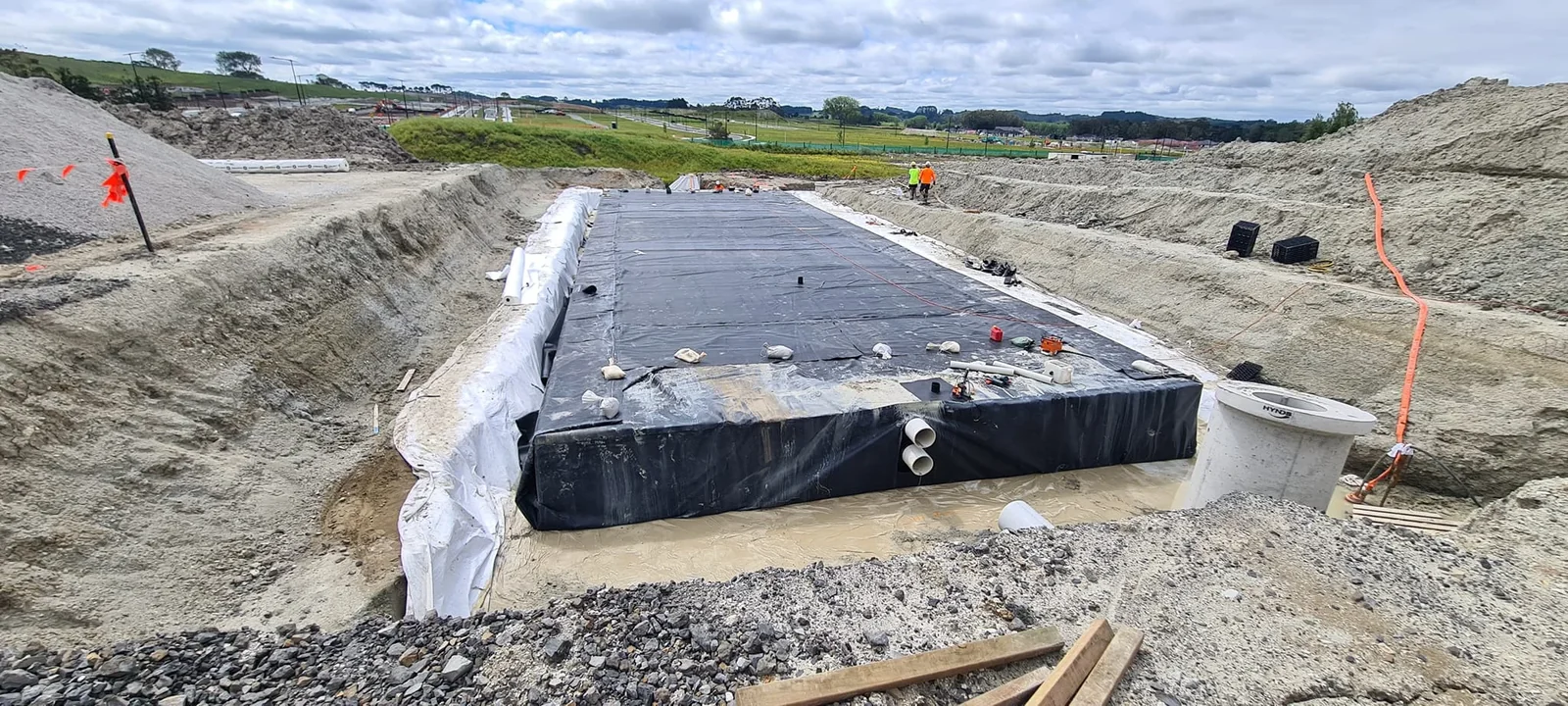
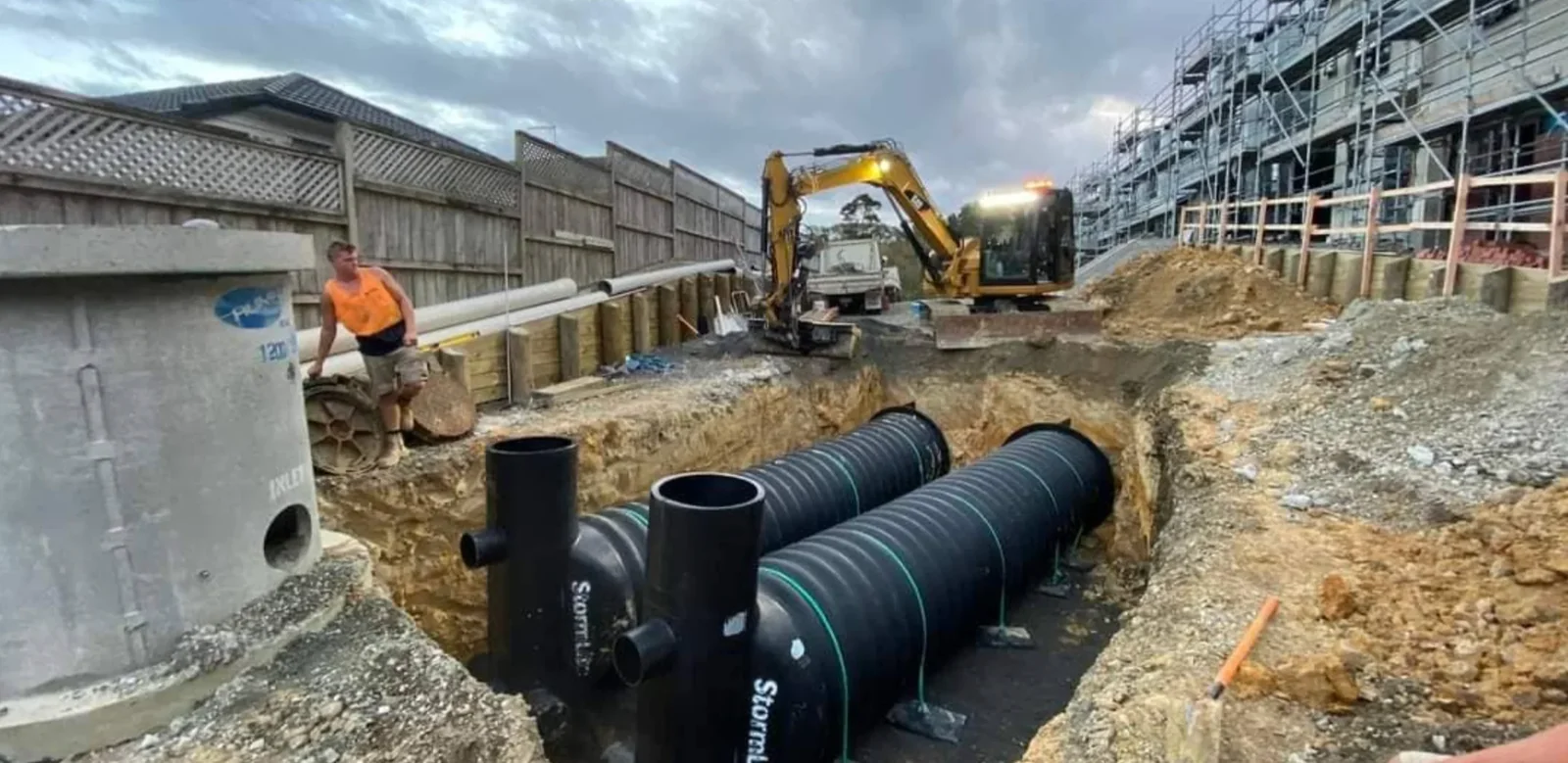
- Detention or retention. Where required, a tank or chamber that holds stormwater temporarily and releases it slowly, reducing the load on the downstream system during heavy rain.
- Soakage. Letting water soak into the ground in a controlled way, but only where the soil and conditions actually allow it. On heavy clay, soakage is often limited or not suitable.
- Swales and overland flow. Shallow channels or graded routes that direct water across the site safely during big rain events.
- Regrading and earthworks. Sometimes the fix is shaping the ground so it sheds water the right way in the first place.
A real drainage system on a clay site is usually a combination of these, designed around how water moves across that specific property and where it can ultimately go.
Council and SMAF Considerations
Stormwater in Auckland is not just an engineering question. There can be council requirements involved, and they are worth understanding before assuming any particular fix is allowed.
Auckland’s stormwater rules can depend on factors like the property itself, the catchment it sits in, how much impervious (hard, non-absorbing) surface the project adds, and the scope of the work. Some areas fall under specific management frameworks, and requirements can vary across the region. A project that adds significant hard surface, for example, may need to manage the extra runoff it creates rather than just shifting it onto the neighbours or the public network.
We are not going to tell you what your specific property does or does not require, because that genuinely depends on the site and should be confirmed properly. What we will say is this: discharge options and council requirements are part of the assessment, not an afterthought. It is always worth checking with council, or having someone who deals with this regularly check on your behalf, before committing to a drainage approach.
The cautious, accurate version is that stormwater requirements may apply, they may affect what is allowed, and they are best worked out as part of assessing the site rather than discovered partway through the job.
Get Stormwater Drainage Assessed Properly
If your property is ponding, holding water, or sending runoff where it should not go, the most useful next step is getting the site assessed before anyone commits to a solution.
A good assessment looks at the soil, the fall across the site, where the water is coming from, where it collects, what drainage already exists, and where it can realistically discharge to. That is what tells you which combination of fixes actually suits the property, rather than guessing.
When you get in touch, it helps to have:
- A few photos of the site, ideally taken after rain so the water shows
- The address or suburb
- Where the water collects and how long it sits
- Any plans if it is a new build or renovation
Blake Civil is a site-first civil and drainage contractor that understands how stormwater behaves on Auckland clay. We assess the site, soil, fall, and discharge options before recommending anything, so the fix suits your property rather than a template.
Call 0508 4 BLAKE or get in touch through the contact form to book a site drainage assessment.