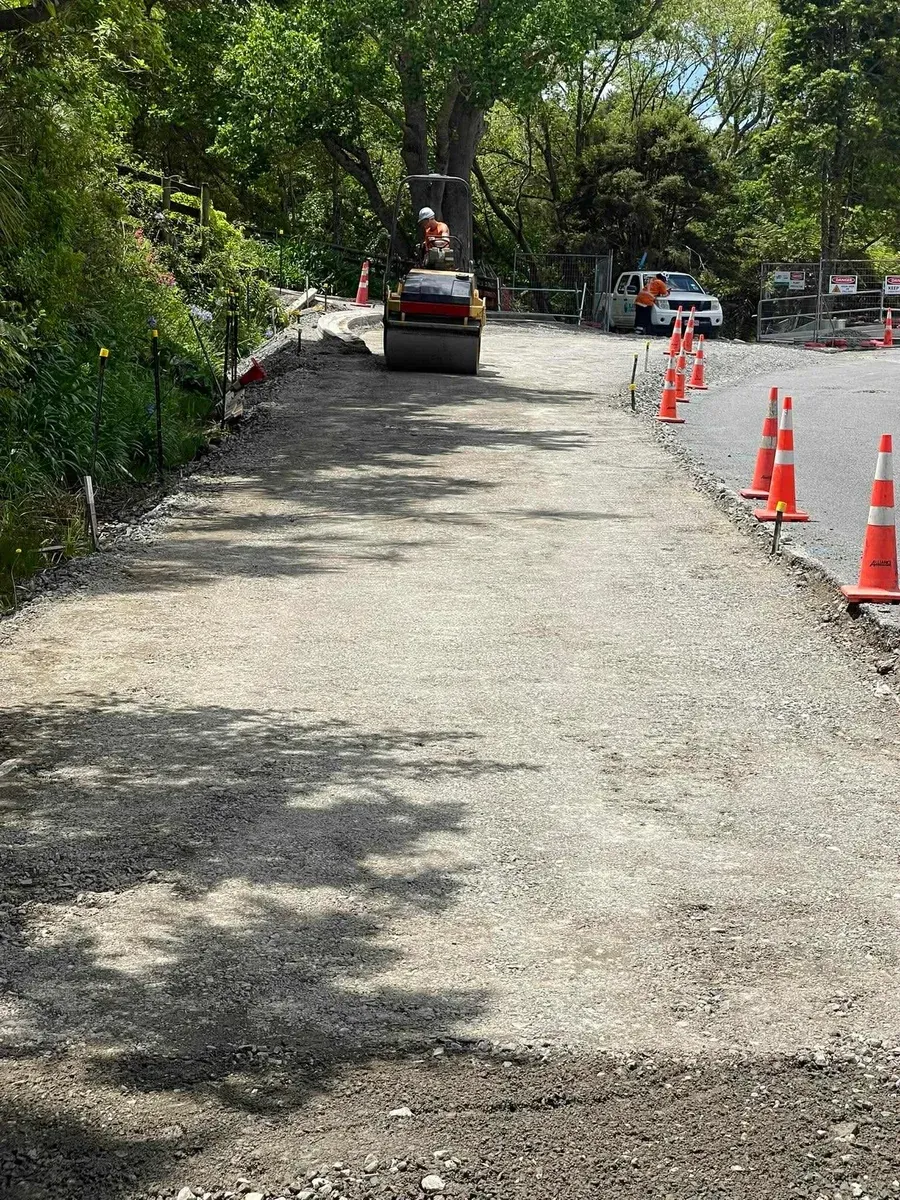
Road & Highway Repair in Auckland
Road and highway repair across Auckland, pothole repair, digout repairs, resurfacing, kerb and channel repair, and utility trench reinstatement for private and commercial roads. We fix the cause, not just the surface.
Our road repair specialists deliver road repair in Auckland for private roads, commercial accessways, subdivisions, and highway maintenance contracts. Whether your road has potholes breaking through the surface, pavement cracking from subgrade failure, or kerb and channel damage from heavy vehicle traffic, our roading crews carry out repairs from the base up, not just the surface down.
What is Road & Highway Repair?
Road and highway repair covers everything from isolated pothole patching through to full pavement reconstruction on failed road sections. In Auckland, roads take a beating from heavy rain saturating clay subgrades, constant traffic loading, and utility trenching that weakens the pavement structure if not reinstated correctly. A surface patch over a structural problem is a temporary fix that fails again within months. We investigate why the road is failing, address the underlying cause (whether that's poor drainage, subbase failure, or inadequate compaction) and carry out a repair that restores the road to its designed capacity. Our work meets Auckland Transport and Waka Kotahi NZTA standards for materials, compaction, and finished surface. Road repair work on the public network must meet Waka Kotahi NZTA's road maintenance standards for pavement repair specifications, traffic management requirements, and approved materials.
- Pothole repair and digout repairs for private roads, car parks, and commercial sites
- Full-depth pavement reconstruction on failed road sections
- Chip seal and hot mix asphalt resurfacing for worn road surfaces
- Kerb and channel repair and replacement
- Utility trench reinstatement to Auckland Transport corridor access standards
- Traffic management plans for repairs on roads carrying live traffic Road repair across Auckland from our Coatesville base, fixing the cause, not just the surface.
Auckland property managers, body corporates, developers, and commercial operators from Dairy Flat to Mangere and Pakuranga have relied on Blake Civil Construction for road repairs that fix the actual problem. We've been working on roads across this region for over 25 years and we've seen what happens when patches are thrown at structural problems, they come back, often worse. We don't do that.
When You Need Us
When You Need Road & Highway Repair in Auckland in Auckland
Potholes Breaking Through the Road Surface
Your private road, car park, or accessway has potholes forming and growing after every rain event. Water is getting into the pavement structure and breaking the surface apart from underneath. The potholes need proper digout repair, not cold mix thrown in the hole.
Road Surface Cracking and Deteriorating
The asphalt or chip seal surface on your road is showing widespread cracking, crocodile cracking, longitudinal cracks along wheel paths, or edge break along the road margins. Patching can't keep up with it anymore and the road needs resurfacing or reconstruction.
Private Road Needs Full Repair After Years of Neglect
A private road or right-of-way has been left without maintenance for years and is now in poor condition, potholes, broken edges, failed drainage, and surface material worn through to the base course. It needs a full assessment and staged repair programme to bring it back to a serviceable standard.
Utility Trench Has Failed After Reinstatement
A water, wastewater, or power trench was cut across your road and the reinstatement has settled or failed. The patch is sinking, cracking, or breaking apart because the backfill wasn't compacted properly. The trench needs to be reopened and reinstated correctly.
Kerb and Channel Damaged by Heavy Vehicles
Concrete kerb and channel along your road has been cracked, broken, or displaced by heavy vehicle overrun or ground movement. Damaged kerbing lets stormwater bypass the drainage system and erode the road edge, causing further pavement failure.
Road Needs Resurfacing Before It Fails Completely
Your road surface is worn, faded, and losing aggregate, but the base course underneath is still structurally sound. A timely chip seal or hot mix asphalt overlay will extend the road life by years and prevent water ingress that would cause the base to fail.
Car Park Surface Breaking Up Under Traffic
Your commercial car park surface is developing potholes, cracking, and loose aggregate in high-traffic areas. The damage is concentrated around entries, exits, and turning areas where vehicles stress the pavement the most.
Subdivision Road Defects Need Repair Before Vesting
A subdivision road has developed defects during the maintenance period before council vesting, settlement in trench lines, surface irregularities, or drainage issues. The defects need to be repaired to Auckland Transport standards before council will accept the road.
Our Process
Our Road & Highway Repair in Auckland Process
Blake Civil Construction follows a systematic approach for every road & highway repair in auckland project.
Road Condition Assessment
We inspect the road to identify what's failing and why. This includes checking the surface condition, probing for subbase depth and quality, assessing drainage, and determining whether the damage is localised or structural. The assessment determines whether the road needs patching, resurfacing, or full reconstruction.
Repair Scope and Traffic Management Planning
Based on the assessment, we define the repair scope, materials, depths, and methods. For repairs on roads carrying live traffic, we prepare a traffic management plan covering signage, speed restrictions, traffic control, and safe working zones compliant with the NZTA Code of Practice for Temporary Traffic Management.
Excavation and Failed Material Removal
We cut out the failed pavement area to a clean, square edge using saw-cutting equipment. All failed surface material and contaminated or saturated subbase is excavated and removed. The excavation goes deep enough to reach sound material that can support the new pavement layers.
Subbase Reinstatement and Compaction
GAP subbase material is placed in controlled layers and compacted to specification. Each layer is compacted to meet the required density before the next lift is placed. Proper compaction at this stage is what prevents the repair from settling and failing again, it's the most critical step in any road repair.
Surface Reinstatement
The finished surface is laid to match the existing road, hot mix asphalt, chip seal, or concrete depending on the road type. We match the surface level, profile, and cross-fall of the surrounding pavement so the repair integrates with the existing road surface without creating bumps or low points that trap water.
Cleanup and Traffic Reopening
All loose material, spoil, and construction debris is removed from the road and surrounding area. Line markings are reinstated if affected. Traffic management is removed and the road is reopened to traffic with the repaired surface ready for immediate use.
Need a Quote for Road & Highway Repair in Auckland?
Get in touch for a free, no-obligation quote on your project.
Why Choose Us
Why Choose Blake Civil for Road & Highway Repair in Auckland?
Root Cause Investigation Before Repair
We find out why the road is failing before we start work. Patching over a drainage problem or subbase failure wastes money, it fails again within months. We address the underlying cause so the repair holds up long term under traffic and Auckland weather.
AT and NZTA Material Standards
Our road repair work meets Auckland Transport and Waka Kotahi NZTA standards for materials, compaction, and surface reinstatement. Whether the repair is on a private road or near a public corridor, it's built to the same specification.
Traffic Management for Live Roads
Road repairs on roads still carrying traffic require compliant traffic management. We prepare and implement TMP plans under the NZTA Code of Practice for Temporary Traffic Management, keeping workers safe and vehicles moving through the work zone.
Saw-Cut Edges for Clean Digout Repairs
Proper digout repairs start with saw-cut edges around the failed area, not ragged excavator bites that leave weak joints. We cut clean, square repair boundaries so the new pavement bonds solidly to the existing road surface.
Full-Depth Reconstruction When Needed
When damage goes deeper than the surface (failed subbase, saturated formation, collapsed drainage) we excavate to formation level and rebuild the full pavement structure. Surface patching on structural failure isn't a repair, it's a delay.
Fast Mobilisation for Safety Hazards
Auckland's heavy rainfall is a primary cause of road damage, saturating subgrades, washing out base course, and accelerating surface deterioration. We understand how water damages roads in Auckland conditions and factor drainage into every repair we carry out.
Related Road & Highway Repair in Auckland Services
Blake Civil Construction provides services that complement our road & highway repair in auckland expertise.
Road Construction Services
New road construction for subdivisions and private access.
Parking Lot Paving
Car park construction, sealing, and line marking.
Concrete Pavement Building
Concrete paths, footpaths, and paved areas for commercial and residential sites.
Civil Construction
Civil construction for public and private infrastructure projects.
Bulk Earthworks
Large-scale cut and fill operations for subdivisions and commercial sites.
Road & Highway Repair in Auckland Coverage - Auckland Wide
Blake Civil provides professional road & highway repair in auckland services across the greater Auckland region.
Our Coatesville base provides rapid response across Auckland for residential, commercial, and industrial road & highway repair in auckland projects.
Contact Blake Civil for Professional Road & Highway Repair in Auckland
When your Auckland project requires professional road & highway repair in auckland, Blake Civil Construction delivers the experience, equipment, and expertise to complete it properly.
43 Mill Flat Road, Coatesville 0793
Road and highway repair across greater Auckland, from our Coatesville base covering private roads, commercial sites, and subdivision roading throughout the region.
25+ years repairing Auckland roads, we fix the cause, not just the surface.
Explore More
Related Services
More services from our Road Construction Company in Auckland category
Parking Lot Paving in Auckland
Commercial car park construction and paving for retail centres, industrial sites, and multi-unit developments across Auckland. We handle subbase prep, stormwater drainage, kerbing, and line marking from our Coatesville base.
Road Construction in Auckland
New road construction for subdivisions, private access roads, rural roads, and commercial developments across Auckland, built to Auckland Transport and council vesting standards.
Ready to Start Your Next Project?
Contact Blake Civil Construction for expert earthworks services across Auckland. Our team is ready to discuss your project and provide a quote.