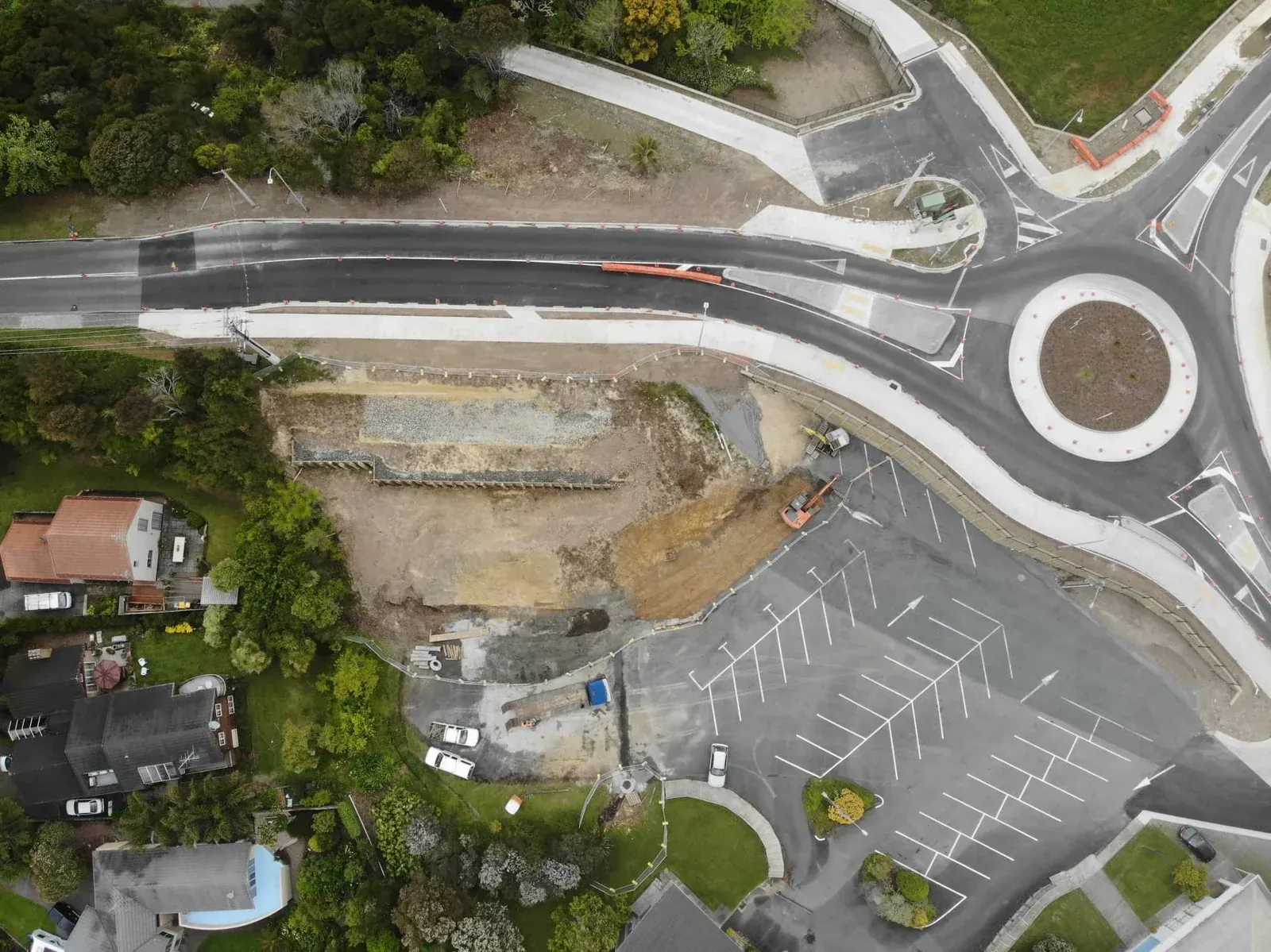
Road Construction in Auckland
New road construction for subdivisions, private access roads, rural roads, and commercial developments across Auckland, built to Auckland Transport and council vesting standards.
Our road building crew delivers road construction in Auckland for residential subdivisions, private access roads, rural properties, and commercial developments. From formation earthworks through to finished sealed surface, our roading crew builds new roads that meet Auckland Transport vesting standards and Auckland Council engineering specifications.
What is Road Construction?
New road construction involves far more than laying a surface on the ground. A road that performs properly and passes council inspection starts with correct formation earthworks, engineered subbase layers, stormwater drainage infrastructure, kerb and channel, and a finished wearing course designed for the expected traffic loading. In Auckland, subdivision roads must comply with NZS 4404 and the Auckland Transport Transport Design Manual before council will accept them for vesting. Private and rural roads have different requirements, but still need proper engineering to last. We manage the full roading process from design coordination through to practical completion and vesting sign-off. Road construction in New Zealand must comply with Waka Kotahi NZTA's road standards and specifications for geometric design, pavement design, and infrastructure performance.
- New subdivision roads built to Auckland Transport vesting standards
- Private road construction for rural properties and lifestyle blocks
- Commercial and industrial access road construction
- Full pavement construction. GAP 40/65 subbase, basecourse, and wearing course
- Kerb and channel, footpaths, and vehicle crossing construction
- Chip seal and hot mix asphalt surface options Delivering new road construction across Auckland from our Coatesville base.
Auckland developers, subdividers, and landowners from Kumeu in the northwest to Manukau in the south and Howick in the east have relied on Blake Civil Construction for new road construction that meets council standards and passes vesting inspection. We've been building roads across this region for over 25 years, we know the ground conditions, the council requirements, and what it takes to get a road signed off.
When You Need Us
When You Need Road Construction in Auckland in Auckland
Subdivision Road Construction for New Developments
Your subdivision consent requires new roads to be built and vested to Auckland Council. We construct the full road to Auckland Transport standards (formation, subbase, kerb and channel, footpaths, stormwater connections, and finished surface) ready for 224 certification and vesting.
Private Road Construction for Rural Properties
Your rural property or lifestyle block needs a private access road from the boundary to the building site. We build private roads with proper formation, drainage, and a sealed or metalled surface suited to the expected traffic and ground conditions.
Right-of-Way Access Road for Rear Lots
Rear lots in a subdivision or cross-lease need a formed access road meeting council width and construction requirements. We build right-of-way access roads with correct turning areas, stormwater drainage, and a durable pavement that handles daily vehicle movements.
Commercial or Industrial Access Road
Your commercial or industrial site needs a new access road to handle heavy vehicle traffic. We build heavy-duty road pavements with increased subbase depths, thicker wearing courses, and drainage designed for the higher traffic loading.
Rural Road Extension or Upgrade
An existing rural road needs extending to reach new building sites or upgrading from a gravel track to a sealed surface. We construct the extension or upgrade with proper formation, drainage improvements, and a sealed surface that handles rural traffic.
Farm and Forestry Road Construction
Agricultural and forestry operations need all-weather access roads that heavy trucks and machinery can use year-round. We build roads with formation and drainage designed to handle logging trucks, stock trucks, and heavy equipment without deteriorating each wet season.
Shared Accessway Construction for Multi-Lot Developments
A multi-lot development needs shared access roads serving multiple properties. We build shared accessways to the engineering standard required by Auckland Council, including passing bays, turning areas, and stormwater management.
Road Formation and Subbase for Future Sealing
The development programme requires road formation and subbase constructed now with the sealed surface to follow later. We build the formation, lay and compact the subbase layers, install kerb and channel, and leave the road ready for surfacing when the programme allows.
Our Process
Our Road Construction in Auckland Process
Blake Civil Construction follows a systematic approach for every road construction in auckland project.
Design Review and Site Assessment
We review the roading engineering plans, cross-sections, and specification. Our team walks the alignment to assess ground conditions, drainage paths, and any site constraints that affect the construction programme. For subdivision roads, we confirm Auckland Transport and NZS 4404 requirements before we start.
Formation Earthworks
The road corridor is excavated or filled to the design formation level. This includes stripping topsoil, cutting through high ground, placing and compacting engineered fill in low areas, and shaping the formation to the correct cross-fall for drainage. GPS-guided machinery keeps the formation accurate to design levels.
Drainage and Services Installation
Stormwater drainage is installed before the pavement layers go down. This includes subsoil drains, stormwater pipes, sumps, manholes, and connections to the wider stormwater network. Water, wastewater, and other service corridors are also installed at this stage.
Subbase and Basecourse Construction
Compacted GAP 40 or GAP 65 subbase is laid on the prepared formation and compacted in layers to specification. Basecourse follows (typically AP40) placed and compacted to achieve the required density and level tolerance. Each layer is tested before the next goes down.
Kerb and Channel, Footpaths, and Vehicle Crossings
Concrete kerb and channel is poured to Auckland Transport profiles along both sides of the road. Footpaths are formed and poured where the design requires them. Vehicle crossings are constructed at each lot frontage to Auckland Transport specifications.
Wearing Course and Practical Completion
The final sealed surface is applied, either chip seal or hot mix asphalt depending on the specification and traffic loading. Line marking, signage, and final clean-up are completed. The road is inspected, as-built plans confirmed, and the road is ready for 224 certification and vesting to council.
Need a Quote for Road Construction in Auckland?
Get in touch for a free, no-obligation quote on your project.
Why Choose Us
Why Choose Blake Civil for Road Construction in Auckland?
Built for Auckland Transport Vesting
Every subdivision road we build meets Auckland Transport's Transport Design Manual and NZS 4404 requirements. From formation depths to surface tolerances, our roads pass council inspection and achieve vesting sign-off without costly rework.
GAP Subbase and Compaction-Tested Layers
Roads fail when the pavement structure is wrong. We build every road with correct layer depths. GAP 40/65 subbase, compacted AP40 basecourse, and a wearing course matched to the traffic loading. Each layer is density tested before the next goes down.
Kerb, Channel, Footpaths, and Vehicle Crossings
Concrete kerb and channel is poured to Auckland Transport profiles along both sides. Footpaths are formed and poured where required. Vehicle crossings are constructed at each lot frontage to AT specifications, all integrated into the roading programme so trades aren't waiting on each other.
Stormwater Infrastructure Built Into Every Road
Water is the biggest threat to road pavement life. We install stormwater sumps, subsoil drains, kerb and channel, and swale drains as part of every road build, keeping water off the pavement surface and out of the structure where it causes damage.
GPS Formation Across the Full Alignment
Our excavators, dozers, and graders run GPS machine control for road formation and subbase placement. Accurate levels across the full road alignment reduce surveyor call-backs and keep the construction programme moving.
Auckland-Wide Subdivision Road Experience
We build subdivision roads across Auckland's growth areas, from Kumeu in the northwest to Manukau in the south and Howick in the east. Working across different parts of the region means we understand the varying ground conditions, council requirements, and engineering expectations that apply in each area.
Related Road Construction in Auckland Services
Blake Civil Construction provides services that complement our road construction in auckland expertise.
Road & Highway Repair
Road and highway repair, resurfacing, and maintenance.
Parking Lot Paving
Car park construction, sealing, and line marking.
Civil Construction Earthworks
Earthworks for roads, subdivisions, and infrastructure corridors.
Infrastructure Development
Infrastructure development for residential and commercial projects.
Bulk Earthworks
Large-scale cut and fill operations for subdivisions and commercial sites.
Road Construction in Auckland Coverage - Auckland Wide
Blake Civil provides professional road construction in auckland services across the greater Auckland region.
Our Coatesville base provides rapid response across Auckland for residential, commercial, and industrial road construction in auckland projects.
Contact Blake Civil for Professional Road Construction in Auckland
When your Auckland project requires professional road construction in auckland, Blake Civil Construction delivers the experience, equipment, and expertise to complete it properly.
43 Mill Flat Road, Coatesville 0793
Delivering new road construction for subdivisions, private properties, and commercial developments across greater Auckland, from our Coatesville base throughout the region.
25+ years building Auckland roads, subdivision streets, rural access tracks, and everything in between.
Explore More
Related Services
More services from our Road Construction Company in Auckland category
Parking Lot Paving in Auckland
Commercial car park construction and paving for retail centres, industrial sites, and multi-unit developments across Auckland. We handle subbase prep, stormwater drainage, kerbing, and line marking from our Coatesville base.
Road & Highway Repair in Auckland
Road and highway repair across Auckland, pothole repair, digout repairs, resurfacing, kerb and channel repair, and utility trench reinstatement for private and commercial roads. We fix the cause, not just the surface.
Ready to Start Your Next Project?
Contact Blake Civil Construction for expert earthworks services across Auckland. Our team is ready to discuss your project and provide a quote.