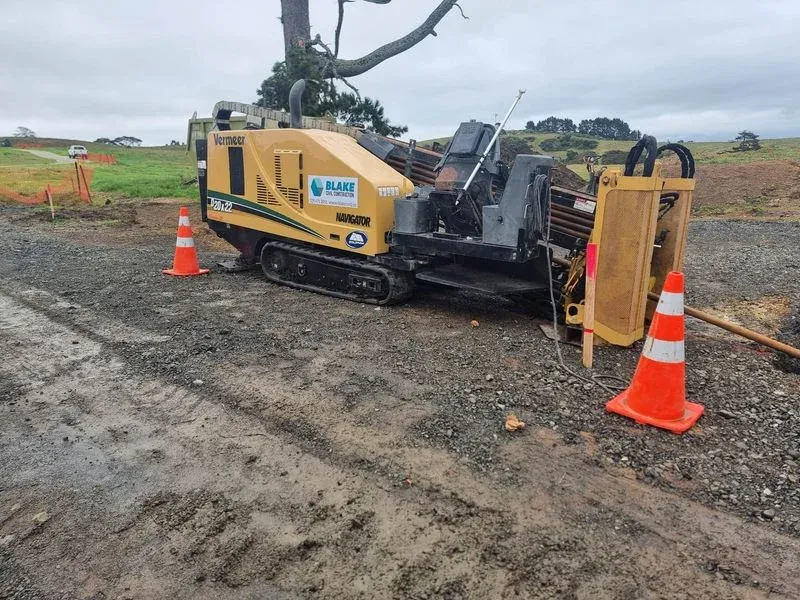
Directional Drilling in Auckland
Horizontal directional drilling (HDD) for installing pipes, cables, and ducts underground without open trenching, trenchless utility installation across Auckland.
Our directional drilling crew provides directional drilling across Auckland for residential, commercial, subdivision, and infrastructure projects. When underground services need to pass beneath roads, driveways, footpaths, or established landscaping, our HDD rigs bore a path underground and pull pipes or cables through without breaking the surface.
What is Directional Drilling?
Directional drilling, or HDD, is a trenchless method for installing underground services. Rather than digging an open trench the full length of the run, a steerable drill head bores a pilot hole underground along a planned path. The hole's then enlarged and the pipe, cable, or duct is pulled back through. The surface above stays intact. We use HDD when crossing busy roads, established gardens, sealed driveways, or any situation where open trenching would cause real disruption, cost a lot to reinstate, or create consent headaches. WorkSafe New Zealand's construction health and safety requirements cover underground boring and drilling operations, including hazard identification, service location, and safe exclusion zone management.
- Horizontal directional drilling (HDD) for water, sewer, stormwater, power, fibre, and telecommunications
- Trenchless crossings beneath roads, footpaths, driveways, and established landscaping
- HDD bores for UFB fibre installation and network infrastructure rollouts
- Corridor Access Request (CAR) preparation for Auckland Transport road crossings
- Watercare-compliant service installations for water and wastewater connections
- Coordination with engineers, network operators, and council inspectors throughout the project
We're based in Coatesville and our HDD rigs work across greater Auckland, from Dairy Flat in the north through to Papatoetoe and Glen Eden in the south and west. We've completed directional drilling jobs from short residential driveway crossings to long road crossings for subdivision trunk services, all within Auckland Transport corridor requirements and Watercare standards.
When You Need Us
When You Need Directional Drilling in Auckland in Auckland
Services Need to Cross a Busy Road
Water, sewer, or power needs to get from one side of a road to the other. HDD bores underneath the road surface without closing lanes or cutting through asphalt, no road opening notice, no reinstatement.
New House Connection Under an Existing Driveway
A sealed driveway sits between the road boundary and the house. Directional drilling runs the service pipe underneath without cutting the driveway or reinstating a patch that never quite matches.
Fibre or Power Through Established Landscaping
Mature trees, gardens, or hedging sit along the service route. HDD passes beneath root zones and planted areas without digging them up or causing root damage that shows up years later.
Subdivision Infrastructure Crossing Existing Roads
A new subdivision needs trunk services connected across an existing public road. HDD gets the crossing done with minimal traffic disruption and a simpler Corridor Access Request than an open trench road crossing.
Replacing or Adding Services Without Disrupting a Car Park
A commercial property needs new services run beneath a sealed car park. Directional drilling avoids weeks of car park closure, excavation, and the kind of reinstatement costs that make the project budget unpleasant.
UFB Fibre Rollout Across Multiple Properties
A fibre network rollout needs ducts installed along a street or through a development. HDD puts multiple conduits in a single bore with no surface trenching required.
Service Crossing Under a Waterway or Drain
Pipes or cables need to cross beneath a stream, open drain, or stormwater channel. HDD bores underneath without environmental disturbance or the complex consent process that open excavation near waterways typically requires.
Connecting a Rural Property Without Trenching a Long Driveway
A rural property has a long gravel or sealed driveway and the service needs to run from the road boundary to the house. HDD follows the driveway alignment underground and leaves the surface untouched.
Our Process
Our Directional Drilling in Auckland Process
Blake Civil Construction follows a systematic approach for every directional drilling in auckland project.
Site Assessment and Service Location
We inspect the site, review plans, and lodge a Beforeudig enquiry. All existing underground services along the bore path are located and physically marked before any work starts.
Bore Path Design and Consent Applications
We plan the drill entry and exit points, bore depth, and alignment. If the bore crosses road reserve, we prepare and submit the Corridor Access Request to Auckland Transport as part of our scope.
Drill Rig Setup and Entry Pit
The HDD rig is positioned at the entry point and a small entry pit is excavated. The rig is aligned to the planned bore path and entry angle before drilling begins.
Pilot Bore Drilling
The steerable drill head bores a pilot hole along the planned path at the correct depth and alignment. The operator guides the head using an above-ground tracking system and adjusts steering as the ground conditions dictate.
Reaming and Pipe Pull-Back
The pilot hole is enlarged to the required diameter using a reamer pulled back through from the exit end. The pipe, cable, or duct is then attached and pulled back through the enlarged bore in one continuous pass.
Connection, Testing, and Sign-Off
Entry and exit pits are reinstated. The installed service is connected, pressure tested or inspected as required, and signed off with the network operator or council inspector.
Need a Quote for Directional Drilling in Auckland?
Get in touch for a free, no-obligation quote on your project.
Why Choose Us
Why Choose Blake Civil for Directional Drilling in Auckland?
Roads, Driveways, and Landscaping Stay Intact
HDD puts services underground without cutting through sealed surfaces, established gardens, or mature tree root zones. The ground above the bore stays untouched. No reinstatement costs and no weeks of disruption to traffic or property access.
Road Crossings Completed in a Day
A road crossing that would take days of open trenching, traffic management, and asphalt reinstatement can often be done in a single day with directional drilling. Less time on site means lower traffic management costs and a faster completion.
Corridor Access Request. Not Full Road Opening
HDD crossings under roads typically need a Corridor Access Request rather than a full road opening notice. The smaller surface impact and shorter occupation time make the Auckland Transport approval process more manageable.
Steerable Drill Head for Precision
The HDD drill head is guided from the surface using a tracking system, letting the operator steer the bore path around obstacles and hold the correct depth throughout. Services land exactly where they need to be.
Clay, Sand, and Rock. Variable Ground Handled
Auckland ground ranges from heavy Waitemata clay to volcanic basalt. Our HDD rigs adjust drill speed, fluid mix, and steering to keep bore accuracy through whatever the ground throws up along the path.
Passes Safely Under Existing Services
Directional drilling follows a controlled bore path at a planned depth, passing under existing pipes, cables, tree roots, and structures. Before drilling, we physically locate everything along the bore path. The controlled approach keeps existing infrastructure safe.
Related Directional Drilling in Auckland Services
Blake Civil Construction provides services that complement our directional drilling in auckland expertise.
Underground Utility Installation
Underground power, water, gas, and fibre optic cable installation.
Sewer Line Installation
Sewer main and lateral installation for residential and commercial sites.
Storm Drain Installation
Storm drain pipe and catchpit installation for stormwater networks.
Trenching
Machine-cut trenches for water, wastewater, power, and fibre connections.
Drainage Install
New drainage pipe installation for residential and commercial properties.
Directional Drilling in Auckland Coverage - Auckland Wide
Blake Civil provides professional directional drilling in auckland services across the greater Auckland region.
Our Coatesville base provides rapid response across Auckland for residential, commercial, and industrial directional drilling in auckland projects.
Contact Blake Civil for Professional Directional Drilling in Auckland
When your Auckland project requires professional directional drilling in auckland, Blake Civil Construction delivers the experience, equipment, and expertise to complete it properly.
43 Mill Flat Road, Coatesville 0793
Directional drilling across greater Auckland, from our Coatesville base we work on residential, commercial, subdivision, and infrastructure projects throughout the region.
Family-owned, Coatesville-based, over 25 years drilling underneath Auckland's roads, driveways, and landscaping. We locate first, then we drill.
Explore More
Related Services
More services from our Utilities Contractor in Auckland category
Sewer Line Installation in Auckland
New sewer connections, sewer line replacement, and subdivision sewer reticulation, installed to Watercare and Auckland Council standards by licensed drainlayers.
Storm Drain Installation in Auckland
New storm drain pipe installation, catchpit and sump construction, culverts, and stormwater reticulation for residential, commercial, and subdivision projects across Auckland.
Underground Utility Installation in Auckland
Full underground utility installation for new builds, subdivisions, and commercial developments, water, wastewater, stormwater, power, and telecommunications connections across Auckland.
Ready to Start Your Next Project?
Contact Blake Civil Construction for expert earthworks services across Auckland. Our team is ready to discuss your project and provide a quote.