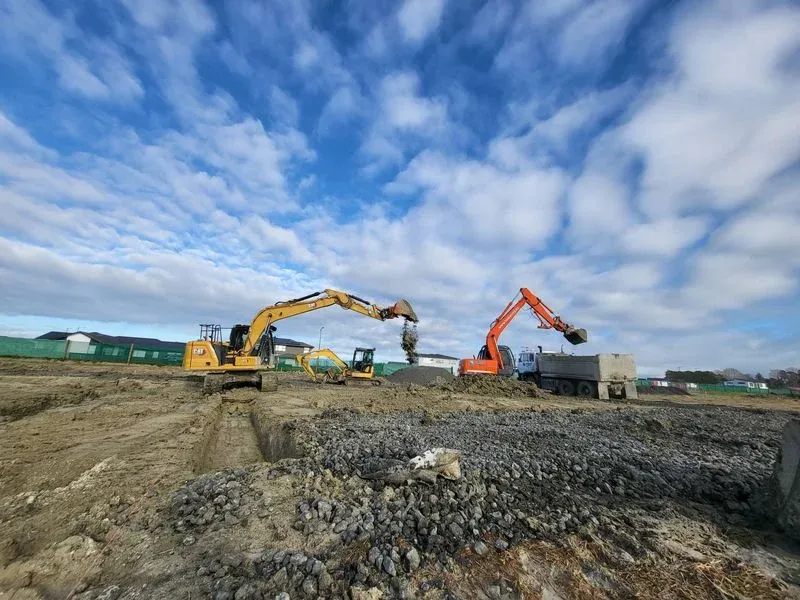
Civil Construction Earthworks in Auckland
Infrastructure-scale earthworks for roads, subdivisions, and commercial sites across Auckland. We've been doing this work for over 25 years and we know how to keep civil programmes on track.
We're a family business based in Coatesville, and our civil earthworks crew has been doing civil construction earthworks across Auckland for over 25 years, road projects, subdivision infrastructure, commercial developments, public works. When your civil project needs formation earthworks done right, to engineering specs, inside consent conditions, and on programme, our fleet and crew handle it start to finish.
What are Civil Construction Earthworks?
Civil earthworks is the heavy moving that sits behind every piece of built infrastructure. Roads need formation cut to design levels. Subdivisions need services corridors trenched and backfilled. Commercial sites need platforms shaped for buildings, car parks, and stormwater. Public works need earthworks managed around live infrastructure and traffic. The scale is large, the tolerances are tight, and the coordination with engineers, council, and other contractors is constant. We manage the full scope ourselves, from resource consent compliance right through to surveyed handover of finished formation. Building Performance's overview of resource consents explains when consent is triggered for earthwork volumes, sediment controls, and engineering plan approvals.
- Road formation earthworks including subgrade preparation and benching
- Subdivision infrastructure earthworks across multi-stage developments
- Commercial and industrial site platform formation
- Public works earthworks coordinated around live services and traffic
- Stormwater and services corridor earthworks with trench support
- Resource consent compliance including GD05 sediment and erosion control Civil earthworks for Auckland infrastructure projects from our Coatesville base, 25+ years in the ground.
Civil contractors, developers, and council project managers from Albany to Warkworth have been calling us for years. Not because we're the biggest outfit on the road, but because we turn up, we hit the spec, and we don't let programmes slip.
When You Need Us
When You Need Civil Construction Earthworks in Auckland in Auckland
Road Formation and Subgrade Preparation
A new road corridor needs the alignment cut to design levels, subgrade material placed and compacted, and formation prepared for base course. We do this with GPS-guided machines, not a surveyor standing there calling corrections every ten minutes.
Subdivision Infrastructure Earthworks
Multi-lot subdivisions need coordinated earthworks across road corridors, services trenches, stormwater reserves, and building platforms, all staged to fit the broader development programme. We've run enough of these to know that staging is where subdivisions win or lose time.
Commercial Development Site Formation
A commercial or industrial site needs large-scale earthworks to shape platforms for buildings, car parks, loading docks, and access roads, with drainage grades that actually work, not ones that look right on paper but pool water in practice.
Roundabout and Intersection Construction
Intersection and roundabout upgrades mean working around live roads and buried services, managing traffic, and sequencing construction to keep things moving. It's not glamorous work, but it takes real discipline to get right.
Stormwater Infrastructure Earthworks
Ponds, swales, and conveyance channels need to hit hydraulic design levels exactly, not approximately. If the pond berm is 50mm low or the swale invert is off, it won't drain the way the engineer modelled it. We use GPS machine control so the earthworks match the hydraulic design.
Public Works and Council Projects
Council infrastructure work, footpaths, reserves, drainage upgrades, happens inside communities. Around live services, on busy road margins, next to occupied homes. We manage that complexity without cutting corners on sediment controls or safety.
Bridge Approach and Culvert Earthworks
Bridge approaches and large culvert installations need careful excavation, structural backfill placed in controlled lifts, and compaction tested to engineered specs around the structure. The fill behind a culvert headwall is not the place to skip a compaction layer.
Shared Path and Cycleway Construction
Shared path corridors often cross variable terrain with awkward grades and tight earthworks tolerances. We cut and fill to keep the formation smooth, drain correctly, and meet the geometric standards that AT and council specify for cycling infrastructure.
Our Process
Our Civil Construction Earthworks in Auckland Process
Blake Civil Construction follows a systematic approach for every civil construction earthworks in auckland project.
Design Review and Programme Planning
We go through the civil drawings, geotechnical report, and consent conditions before a machine moves. That's where we work out the earthworks sequence, haul routes, and staging so we're not creating problems for the drainage crew working behind us.
Environmental Controls and Site Setup
Silt fences, stabilised entrances, and decanting devices go in before any ground gets touched. Not because council is watching, because sediment controls that go in on day one actually work. Ones installed after a rain event don't.
Services Location and Protection
Underground services get located, marked, and protected before we start excavating. On civil sites, live water mains, power, and telecoms are normal hazards. Our operators know how to work around them without taking out someone's supply.
Formation Earthworks and Material Placement
GPS-guided excavators and dozers cut formation to design levels. Approved fill material goes down in layers, typically 150-200mm lifts, and gets compacted to the geotechnical spec. No thick lifts, no shortcuts on the compaction passes.
Compaction Testing and Quality Assurance
Every fill and formation layer gets density tested at the intervals the geotechnical engineer specifies. Results go to the engineer for sign-off before the next stage moves. If a layer fails, we rework it and retest. That's the job.
Survey Confirmation and Handover
Finished formation gets surveyed against design levels. We hand over with test results and as-built information so the next contractor, drainage, services, roading, can start without chasing paperwork.
Need a Quote for Civil Construction Earthworks in Auckland?
Get in touch for a free, no-obligation quote on your project.
Why Choose Us
Why Choose Blake Civil for Civil Construction Earthworks in Auckland?
Road Formation and Subgrade Work
Road formation needs correct cross-falls, consistent subgrade levels, and compaction to spec across the full alignment. Our GPS-guided machines cut to the design model in real time. The formation passes engineering checks because it's built to the right level, not adjusted after the fact.
Working Around Other Trades
Civil sites have engineers, surveyors, drainage contractors, roading crews, and services installers all trying to work at the same time. We've been doing this long enough to know how to sequence earthworks so we're handing over completed sections when other trades need them, not sitting on ground they can't access.
Services Corridor Earthworks
Subdivision and infrastructure earthworks include trenching for water, wastewater, stormwater, power, and fibre. We excavate the trenches, prepare the bedding, and backfill as part of the earthworks programme. That scope gets built in from the start, it's not an add-on.
Live Services and Traffic Management
Our operators work around live water mains, power cables, and active roads on civil sites every day. They know how close they can get with a 20-tonne machine, and when to stop and call the asset owner. In 25+ years we haven't taken out a main or disconnected a neighbourhood.
Our Own Fleet, No Waiting on Subs
We run 20-30 tonne excavators, dozers, graders, rollers, and tip trucks. Owning the earthmoving and cartage gear means we control the programme. When weather clears and you need to get back on site fast, we're not waiting on a subcontractor to free up a dozer.
Keeping Programmes Moving Through Auckland Winters
Auckland weather doesn't pause civil contracts. We keep GD05 sediment controls maintained through rain events, protect completed formation from saturation, and stage the works to minimise downtime through the wet months. It's not comfortable work in July, but it keeps the programme alive.
Related Civil Construction Earthworks in Auckland Services
Blake Civil Construction provides services that complement our civil construction earthworks in auckland expertise.
Civil Site Bulk Earthworks
Large-scale cut and fill operations for subdivisions and commercial sites.
Infrastructure Building Platforms
Cutting, filling, and compacting building platforms to spec.
Civil Construction Works
Civil construction for public and private infrastructure projects.
Road Formation Construction
New road construction for subdivisions and private access.
Infrastructure Development Projects
Infrastructure development for residential and commercial projects.
Civil Construction Earthworks in Auckland Coverage - Auckland Wide
Blake Civil provides professional civil construction earthworks in auckland services across the greater Auckland region.
Our Coatesville base provides rapid response across Auckland for residential, commercial, and industrial civil construction earthworks in auckland projects.
Contact Blake Civil for Professional Civil Construction Earthworks in Auckland
When your Auckland project requires professional civil construction earthworks in auckland, Blake Civil Construction delivers the experience, equipment, and expertise to complete it properly.
43 Mill Flat Road, Coatesville 0793
We work across greater Auckland from our Coatesville base, roads, subdivisions, commercial developments, and public works from Albany down to Papakura and out to Warkworth.
Family-owned, Coatesville-based, 25+ years doing civil earthworks across Auckland. We know this ground.
Explore More
Related Services
More services from our Earthworks Contractor Auckland category
Building Pad Preparation in Auckland
Building pad preparation for new homes, townhouses, and commercial buildings across Auckland, cut and fill, compaction to spec, and platforms that pass testing first time on sloped and clay-heavy sections.
Bulk Earthworks in Auckland
Large-scale cut and fill moving thousands of cubic metres for subdivisions, commercial developments, and infrastructure projects across Auckland.
Compaction Services in Auckland
Ground compaction for building pads, driveways, and subdivisions. Fill placed to spec, rolled properly, tested so you pass first time and keep the project moving.
Consented Land Filling in Auckland
Controlled placement of approved fill material under Auckland Council resource consent conditions, compaction testing, environmental monitoring, and documentation for council sign-off.
Excavation and Grading in Auckland
Cut and fill, site levelling, and GPS-guided grading to finished levels for new builds, commercial developments, and rural sections across Auckland.
Land & Site Clearing in Auckland
Full site clearing for rural sections, lifestyle blocks, and greenfield development. Vegetation removed, stumps ground, debris disposed of, and the land ready for construction.
Ready to Start Your Next Project?
Contact Blake Civil Construction for expert earthworks services across Auckland. Our team is ready to discuss your project and provide a quote.