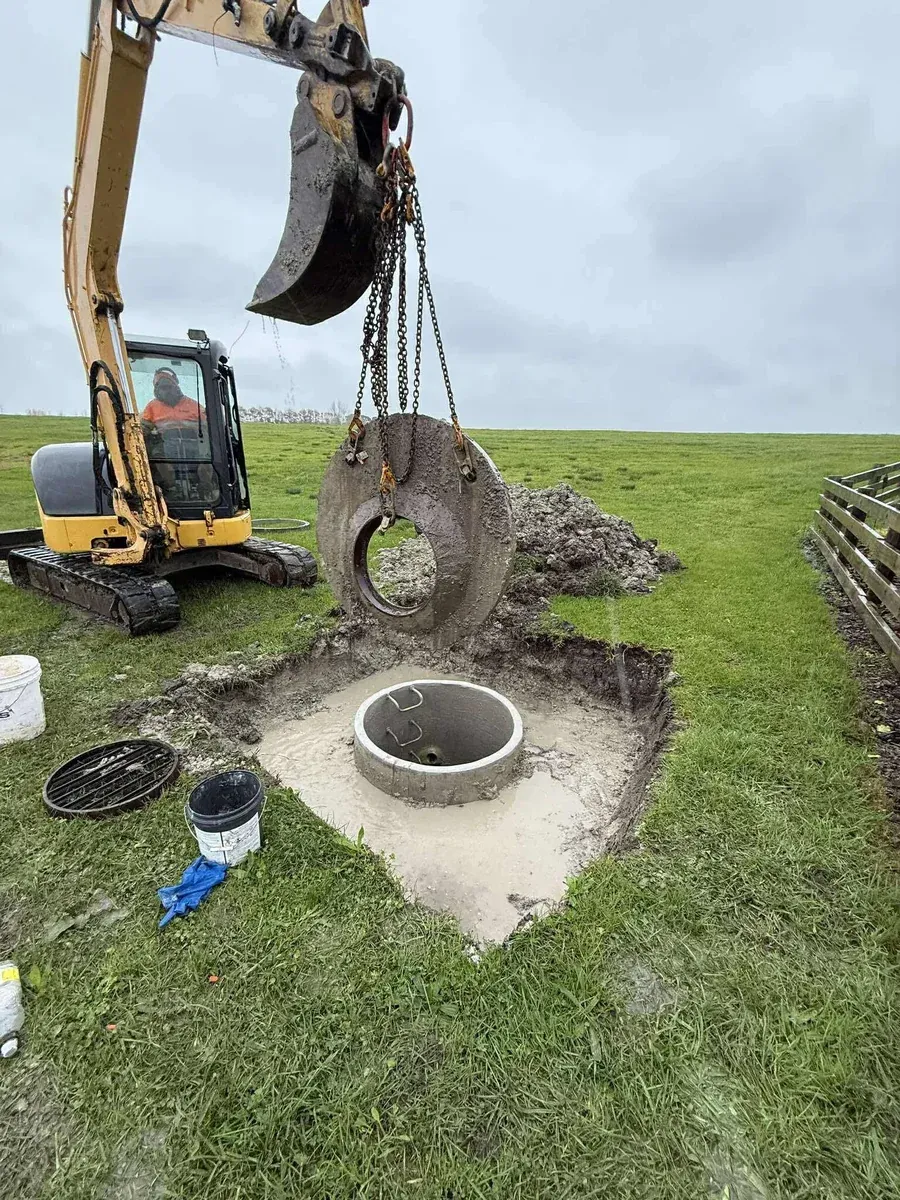
Septic System Installation in Auckland
Septic tank and aerated treatment system installation for rural and semi-rural Auckland properties. Fully consented on-site wastewater solutions with disposal fields designed for the soil conditions on your specific site.
Our septic system team installs septic systems across Auckland for rural properties, lifestyle blocks, and semi-rural developments that sit outside the reticulated sewer network. We put in traditional septic tanks, aerated treatment systems, and disposal fields, all designed and consented to meet Auckland Council on-site wastewater rules.
What is Septic System Installation?
Properties in rural Auckland, from Coatesville and Dairy Flat through to Kumeu, Helensville, and Warkworth, run on on-site wastewater treatment because there's no council sewer to connect to. A septic system collects, treats, and disperses household wastewater on your own land. It needs to be sized right for your household, matched to your actual soil type, and consented through Auckland Council before we can start. We handle every part of that process, site assessment, soil percolation testing, system design, council consent, excavation, tank installation, disposal field construction, and final sign-off. On-site wastewater systems in Auckland must also satisfy New Zealand's freshwater management framework, which sets the national environmental standards governing how treated effluent is discharged to land and water.
- Traditional septic tank installation with gravity-fed disposal fields
- Aerated treatment system (ATS) installation for sites with difficult soil conditions
- Disposal field and land application area design and construction
- Soil percolation testing to determine ground absorption rates
- Auckland Council on-site wastewater consent applications and inspections
- Septic system replacement and upgrades on existing rural properties
We're based in Coatesville and install septic systems across Auckland's rural and semi-rural areas every month, from Dairy Flat and the rural fringe near Papatoetoe to lifestyle blocks around Hobsonville Point. Our licensed drainlayers know the clay types, the council requirements, and which system design fits which ground.
When You Need Us
When You Need Septic System Installation in Auckland in Auckland
New Build on a Rural Lifestyle Block
Your new home is on a rural section with no sewer connection. You need a fully consented on-site wastewater system designed and installed before you can occupy.
Failing Septic System Needs Replacement
Your existing septic tank is old, cracked, or overflowing. The disposal field has failed and wastewater is surfacing on the ground, creating a health risk.
Minor Dwelling or Sleepout Addition
You're adding a minor dwelling or sleepout to your rural property and need to upgrade or extend the existing septic system to handle the increased load.
Subdivision Creating New Rural Lots
A rural subdivision is creating new lots outside the sewer network. Each lot needs its own on-site wastewater system designed to meet council consent conditions.
Council Compliance Notice on Existing System
Auckland Council has issued a notice requiring you to upgrade your on-site wastewater system to meet current standards. You need a compliant replacement installed.
Difficult Soil Conditions for Disposal
Your property has heavy clay or poor-draining soil that limits disposal field performance. You need an aerated treatment system with a designed land application area.
Converting Shed or Building to Habitable Space
You're converting a farm building or shed into liveable space and need to install a new on-site wastewater system to service the plumbing fixtures being added.
Rural Commercial Premises Without Sewer
A rural commercial property such as a cafe, workshop, or childcare centre needs an on-site wastewater system sized to handle commercial flow volumes and usage patterns.
Our Process
Our Septic System Installation in Auckland Process
Blake Civil Construction follows a systematic approach for every septic system installation in auckland project.
Site Assessment and Soil Testing
We come out, walk the property, look at the ground conditions, and run soil percolation tests to find out how fast your soil actually absorbs treated wastewater.
System Design and Sizing
Soil test results plus household size tell us what the system needs to be. We pick the right tank type and size the disposal field to match your site, not a generic calculation.
Council Consent Application
We put together and lodge the on-site wastewater consent application with Auckland Council, site plans, system specs, percolation results, the lot.
Excavation and Tank Installation
Once consent comes through, we dig the tank pit, install the treatment tank on a solid base, and connect all inlet and outlet pipework.
Disposal Field Construction
We build the disposal field, laying distribution pipes in gravel-filled trenches designed to disperse treated effluent into the ground at the rate your soil can take.
Commissioning and Council Sign-Off
The system gets tested and commissioned. Auckland Council carries out their inspection. We hand over the documentation and operating instructions so you know what to do going forward.
Need a Quote for Septic System Installation in Auckland?
Get in touch for a free, no-obligation quote on your project.
Why Choose Us
Why Choose Blake Civil for Septic System Installation in Auckland?
Soil Percolation Testing Before Design
We test your soil's actual absorption rate before we pick a system, not after. Those percolation results determine whether a traditional septic tank or aerated treatment system fits your site, and they set the exact size and layout of the disposal field.
TP58 Consent Applications Managed
Auckland Council on-site wastewater consents need TP58-compliant documentation, site plans, soil test data, system specifications. We put together the full package and run the consent through to approval. No loose ends for you to chase.
Aerated Treatment for Difficult Soils
When heavy clay or small lot sizes make traditional septic disposal fields unworkable, we go with aerated treatment systems. They produce cleaner effluent that can handle land application on the kind of tough Auckland soils where a standard septic tank just won't get the job done.
Disposal Field Sized for Your Household
An undersized disposal field fails within years. We work out the field dimensions from your household size, daily wastewater volume, and the soil's actual absorption rate. That way it handles your real usage, not some textbook average.
Tank Excavation on Rural Terrain
Septic tank pits on Auckland lifestyle blocks regularly mean steep access, wet ground, and clay that holds water in the excavation hole. I've been doing this long enough to know what that looks like. Our machines and operators are set up for the difficult digs that come with rural installs.
Site Testing to Council Sign-Off. One Team
Soil testing, system design, consent application, excavation, tank placement, disposal field construction, and final council inspection, all under one contract. You're not stitching together a testing company, a designer, and an installer.
Related Septic System Installation in Auckland Services
Blake Civil Construction provides services that complement our septic system installation in auckland expertise.
Sewer and Wastewater Pipe Work
Wastewater pipe installation, sewer connections, and treatment systems.
Drainage Pipe and Network Install
New drainage pipe installation for residential and commercial properties.
Site Subsoil Drainage Systems
Complete drainage system design including subsoil drains and soak pits.
Lifestyle Block Water Delivery
Water delivery for lifestyle blocks and rural properties outside town supply.
Rural Trenching and Excavation
Machine-cut trenches for water, wastewater, power, and fibre connections.
Septic System Installation in Auckland Coverage - Auckland Wide
Blake Civil provides professional septic system installation in auckland services across the greater Auckland region.
Our Coatesville base provides rapid response across Auckland for residential, commercial, and industrial septic system installation in auckland projects.
Contact Blake Civil for Professional Septic System Installation in Auckland
When your Auckland project requires professional septic system installation in auckland, Blake Civil Construction delivers the experience, equipment, and expertise to complete it properly.
43 Mill Flat Road, Coatesville 0793
Septic system installation for rural and semi-rural properties across greater Auckland.
Licensed drainlayers based in Coatesville, we install septic systems across rural Auckland every week.
Explore More
Related Services
More services from our Drainage Contractors in Auckland category
Drainage Installation in Auckland
New drainage pipe installation across Auckland, from council mains connections to full on-site drainage networks. Licensed drainlayers, building consent managed, council sign-off included.
Drainage Systems in Auckland
Drainage system design and construction for Auckland properties, subsoil drains, channel drains, soak pits, and combined gravity-fed systems built for Auckland's clay soils and 1,200mm+ annual rainfall.
Stormwater Management in Auckland
Stormwater detention, retention, and on-site disposal systems designed to meet Auckland Council SMAF requirements and handle high rainfall on clay-heavy sites.
Wastewater Management in Auckland
Wastewater pipe installation, sewer connections, on-site treatment systems, and subdivision wastewater infrastructure for residential, commercial, and rural properties across Auckland.
Ready to Start Your Next Project?
Contact Blake Civil Construction for expert earthworks services across Auckland. Our team is ready to discuss your project and provide a quote.