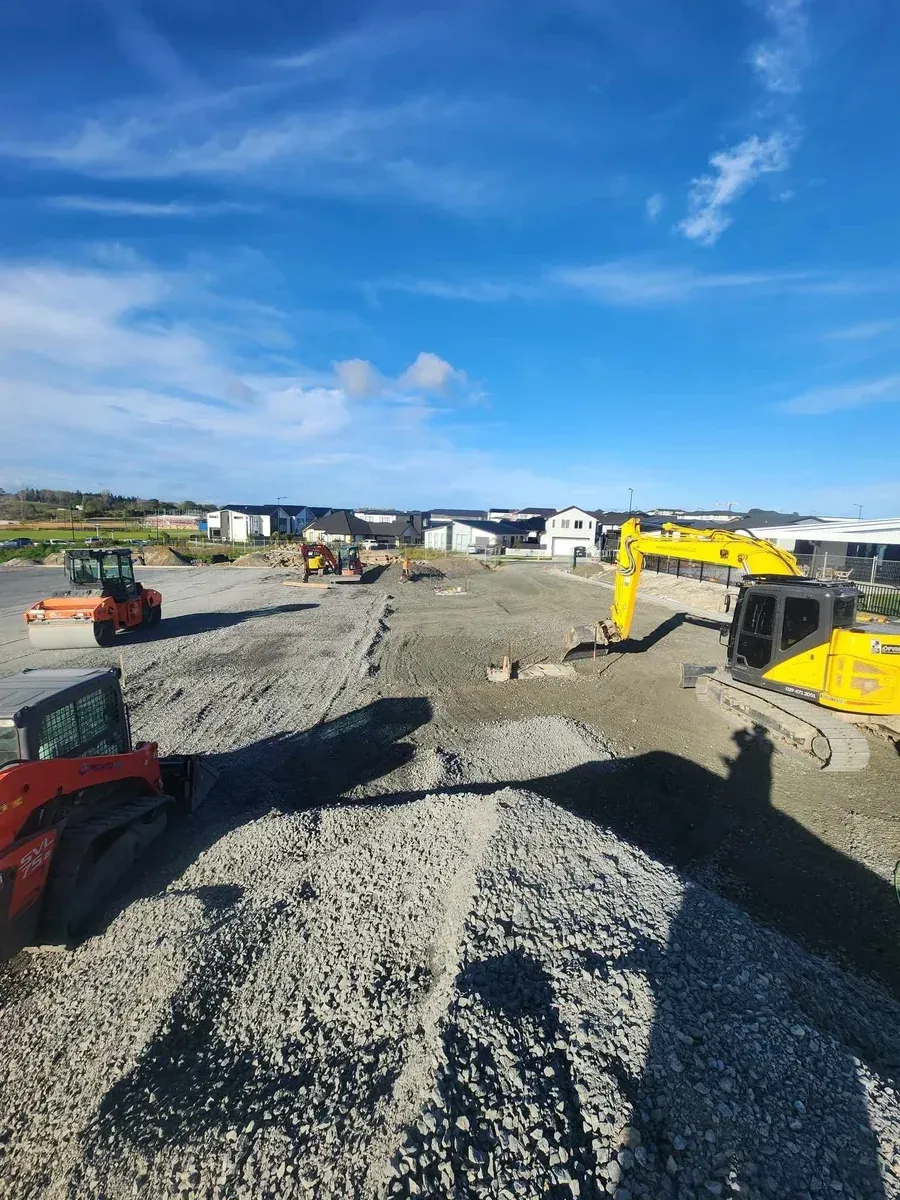
Building Pad Preparation in Auckland
Building pad preparation for new homes, townhouses, and commercial buildings across Auckland, cut and fill, compaction to spec, and platforms that pass testing first time on sloped and clay-heavy sections.
Building pad preparation determines whether a new build goes up on solid ground or a platform that shifts over time. We're a family business based in Coatesville and our building pad team has been preparing building platforms across Auckland for over 25 years. Cut and fill, ground shaping, layer-by-layer compaction. We work across the full Auckland region, from rural lifestyle blocks to urban townhouse sites, turning raw sections into something your builder can start on without worrying about what's underneath.
What is Building Pad Preparation?
A building pad is the shaped, levelled, and compacted area of ground your house or building sits on. Getting it right means cutting the high side, filling the low side, compacting the fill to the geotechnical spec, and finishing to the levels your engineer designed. We run the full process ourselves, from site strip through to a certified platform ready for foundations, whether that's a concrete slab, RibRaft system, or piled design. One contractor, full responsibility. Building platforms must meet MBIE's Building Code structural stability requirements for foundations and ground preparation under all new structures.
- Cut and fill building platforms for residential and commercial projects
- Compaction to NZS 4431 with layer-by-layer density testing
- Benched platforms on sloped sections across Auckland's varied terrain
- GPS-guided machinery for accurate level control
- Geotechnical coordination and compaction certification
- Building platforms from single house pads to multi-unit developments Building pad preparation across Auckland from our Coatesville base, 25+ years working with this ground.
Builders working in Warkworth, Howick, and Massey have called us back on repeat jobs. Not because we're the cheapest, but because our pads pass testing first time and the compaction documentation is ready when their engineer needs it.
When You Need Us
When You Need Building Pad Preparation in Auckland in Auckland
New House Build on a Sloped Section
Your section falls away from the road and needs a level platform cut into the hillside. We bench into the slope, place engineered fill on the low side in controlled layers, and compact it to the design level. The transition between cut and fill is where problems start if it's not done carefully, we've been doing this on Auckland's hilly terrain across the region for years.
Townhouse or Multi-Unit Development
Multiple pads needed across a development site with varying ground levels. We prepare each platform to the surveyed design and coordinate cut and fill movements across the whole site to keep material on-site where the spec allows. Moving dirt once is expensive. Moving it twice because it was stockpiled in the wrong spot is worse.
Building Platform on Clay Ground
Heavy Auckland clay becomes soft and unstable when wet, then shrinks and cracks when it dries out. We strip the topsoil and unsuitable surface material, assess what the subgrade is doing, and build the pad with approved fill compacted in controlled layers. The clay behaviour on your specific site matters, there's a big difference between a dry Dairy Flat clay and a waterlogged clay in a low-lying Kumeu paddock.
Pad Preparation for RibRaft Foundation
RibRaft pod foundation systems need a flat, compacted platform at a precise level, no humps, no hollows. The polystyrene pods need to sit fully supported across the whole footprint. We prepare pads to the tolerances RibRaft installers require so they can start work without grading anything out first.
Replacing a Failed Building Platform
A previous contractor's pad has failed compaction testing or settled unevenly. We strip back the failed fill down to a stable base, work out why it failed, material quality, moisture issues, inadequate lift thickness, and rebuild the platform with material placed and compacted in the layers the geotech specifies.
Rural Lifestyle Block House Pad
A lifestyle block in Dairy Flat or Coatesville with a building site on uneven ground. We work with the natural contours, create a level pad at the right level, and manage drainage away from the platform so it doesn't pond under the house during the wet season. Rural sections often have wet areas that need dealing with as part of the pad prep work.
Pad Preparation Before Resource Consent Expires
Your resource consent has an earthworks deadline approaching. We can mobilise quickly, prepare the platform to spec inside the consent timeframe, and have sediment controls in place from the first day on site. Consent conditions don't move, the programme has to.
Building Pad on Previously Filled Ground
Your section has old uncontrolled fill from previous work. The first job is working out what's actually there, how deep the fill goes, what material was used, and whether it was ever compacted. We investigate, strip unsuitable material back to natural ground or a reliable base, and rebuild with engineered fill to the geotech requirements. Old fill that nobody has tested is one of the bigger risks on an Auckland section.
Our Process
Our Building Pad Preparation in Auckland Process
Blake Civil Construction follows a systematic approach for every building pad preparation in auckland project.
Site Visit and Geotechnical Review
We visit the section, read the geotechnical report, check the building plans, and confirm pad dimensions, required levels, and fill spec with your engineer before anything else happens. A building pad that doesn't match the geotech report means problems at the producer statement stage.
Sediment Control and Site Setup
Silt fences, stabilised entrance, and any diversion drains go in before the first bucket of topsoil moves. Not after the first rain event. GPS machine control gets loaded with the design surface so operators can work to level from the start.
Topsoil Strip and Subgrade Preparation
Topsoil and vegetation come off the full pad footprint and any areas where fill will go. Then we look at what's underneath. Soft spots, organic material, old uncontrolled fill, anything that won't support what's going on top gets removed before fill placement starts.
Cut and Fill to Design Levels
Material comes off the high side in GPS-guided passes and goes onto the low side in controlled lifts. Each layer is 150-200mm loose before compaction. The GPS keeps operators on the design surface so we're not over-excavating on the cut or under-filling on the low side.
Layer-by-Layer Compaction and Testing
Every fill lift gets compacted and then density tested before the next one goes down. If a layer fails, we rework it, adjust moisture, add compaction passes, or replace material that isn't performing, and retest. There's no moving forward until the layer is confirmed.
Final Trim and Handover
The finished pad gets trimmed to design levels, surveyed for confirmation, and all compaction test records are compiled into documentation for your engineer's producer statement. That paperwork is what keeps the building consent moving.
Need a Quote for Building Pad Preparation in Auckland?
Get in touch for a free, no-obligation quote on your project.
Why Choose Us
Why Choose Blake Civil for Building Pad Preparation in Auckland?
Benched Platforms on Steep Ground
Many Auckland sections, from the eastern hills in Howick through to the rural blocks around Warkworth and Massey, sit on terrain that needs the pad benched into the slope. We cut into the high side, place engineered fill on the low side, and key the fill properly into the natural ground at the base, not just pile it against the cut face. That transition is where cut-and-fill pads fail if the work isn't done right.
Layer-by-Layer Compaction to NZS 4431
Every fill layer goes down at controlled thickness, gets compacted with equipment matched to the material, and gets density tested before the next lift. If the layer fails, we rework and retest. Your pad meets the NZS 4431 standard your engineer specified, and we have the test records to prove it.
GPS Machine Control on Site
Our excavators and dozers run GPS guidance referenced to the engineer's design surface. Operators cut and fill to level in real time. That means we're not over-excavating on the cut side or leaving the fill short on the low side, which is how you end up with imported fill costs and rework bills that weren't in the quote.
RibRaft-Ready Tolerances
RibRaft pod foundation systems need the pad flat and level, humps and hollows in the pad surface mean the pods don't sit right and the slab thickness varies. We build pads to the tolerances RibRaft installers need so they can get started without grading anything out on arrival.
Compaction Documentation Ready for Your Engineer
We provide test results, layer records, and fill placement documentation in the format your geotechnical engineer needs to issue a producer statement. That paperwork is what keeps the building consent processing. We've seen projects stall for weeks because nobody could find the compaction records, so we make sure ours are complete before we leave site.
One Contractor from Strip to Handover
We handle the whole building pad job, site strip, cut and fill, compaction, testing coordination, final trim. No switching between contractors or gaps where responsibility gets unclear. If there's a problem with the pad, there's one phone number to call. That's us.
Related Building Pad Preparation in Auckland Services
Blake Civil Construction provides services that complement our building pad preparation in auckland expertise.
Building Pad Compaction
Ground compaction to engineering specs for building platforms and driveways.
Pad Level Excavation
Precision excavation and grading for level building sites and drainage falls.
Slab Foundation Construction
Concrete slab and foundation construction for residential and commercial buildings.
Site Setup Before Earthworks
Complete site setup including access, topsoil stripping, and erosion controls.
Development Site Earthworks
Large-scale cut and fill operations for subdivisions and commercial sites.
Building Pad Preparation in Auckland Coverage - Auckland Wide
Blake Civil provides professional building pad preparation in auckland services across the greater Auckland region.
Our Coatesville base provides rapid response across Auckland for residential, commercial, and industrial building pad preparation in auckland projects.
Contact Blake Civil for Professional Building Pad Preparation in Auckland
When your Auckland project requires professional building pad preparation in auckland, Blake Civil Construction delivers the experience, equipment, and expertise to complete it properly.
43 Mill Flat Road, Coatesville 0793
Residential, commercial, and subdivision building pad work across greater Auckland, from our Coatesville base we cover the full region.
Family-owned, based in Coatesville, 25+ years preparing building pads across Auckland. Our pads pass testing first time.
Explore More
Related Services
More services from our Earthworks Contractor Auckland category
Bulk Earthworks in Auckland
Large-scale cut and fill moving thousands of cubic metres for subdivisions, commercial developments, and infrastructure projects across Auckland.
Civil Construction Earthworks in Auckland
Infrastructure-scale earthworks for roads, subdivisions, and commercial sites across Auckland. We've been doing this work for over 25 years and we know how to keep civil programmes on track.
Compaction Services in Auckland
Ground compaction for building pads, driveways, and subdivisions. Fill placed to spec, rolled properly, tested so you pass first time and keep the project moving.
Consented Land Filling in Auckland
Controlled placement of approved fill material under Auckland Council resource consent conditions, compaction testing, environmental monitoring, and documentation for council sign-off.
Excavation and Grading in Auckland
Cut and fill, site levelling, and GPS-guided grading to finished levels for new builds, commercial developments, and rural sections across Auckland.
Land Clearing in Auckland
Full site clearing for rural sections, lifestyle blocks, and greenfield development. Vegetation removed, stumps ground, debris disposed of, and the land ready for construction.
Ready to Start Your Next Project?
Contact Blake Civil Construction for expert earthworks services across Auckland. Our team is ready to discuss your project and provide a quote.