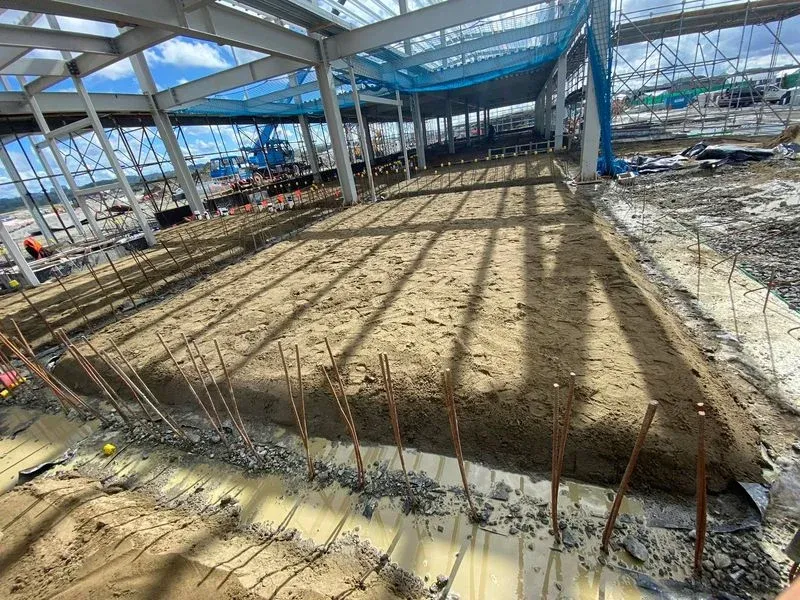
Slab Foundation Construction in Auckland
Engineered slab foundations for Auckland new builds. RibRaft waffle pod systems, traditional raft slabs, and reinforced concrete foundations built to NZS 3604 and specific engineering design on Auckland's clay soils.
Our foundation construction team builds slab foundations for residential and commercial projects across Auckland. From RibRaft waffle pod systems on standard residential builds through to heavily reinforced raft slabs on challenging clay ground, we manage the full scope. Ground preparation, formwork, reinforcing steel, concrete placement, curing. Your build starts on a foundation that's been done right.
What is Slab Foundation Construction?
Slab foundation construction is the ground-level concrete platform that supports a building's entire structure. In Auckland, where expansive clay soils are everywhere and geotechnical conditions vary across suburbs, foundation design isn't one-size-fits-all. We build RibRaft (waffle pod) foundations, traditional raft slabs, thickened-edge slabs, and engineer-designed hybrid foundations to suit the specific ground conditions on your site. Every foundation we pour starts with proper ground preparation (stripping topsoil, compacting subgrade, installing drainage and damp-proof membranes) before any reinforcing steel or concrete goes down. We coordinate with geotechnical engineers, building consent authorities, and ready-mix suppliers to deliver foundations that meet NZS 3604 or specific engineering design requirements. Every concrete foundation in New Zealand must comply with MBIE's Building Code B1 structural stability requirements, whether following the NZS 3604 prescriptive standard or a specific engineering design.
- RibRaft (waffle pod) slab foundations for standard residential builds
- Traditional raft slab foundations for larger or more complex structures
- Thickened-edge slabs and engineer-designed foundations for challenging sites
- Ground preparation including subgrade compaction, hardfill, and DPM installation
- Steel reinforcing placement to engineering specifications
- Concrete placement via pump with finishing to specified tolerances Based in Coatesville. Pouring slab foundations across Auckland for over 25 years.
Auckland builders and developers from Albany to East Tamaki to Massey rely on Blake Civil Construction for slab foundations that meet engineering specs and pass council inspection first time. We've poured enough slabs on this ground to know what the clay throws at you.
When You Need Us
When You Need Slab Foundation Construction in Auckland in Auckland
New Residential Build Requires Slab Foundation
Your house build is ready to move from earthworks to foundation construction. A slab foundation built to the engineer's design, consented drawings, and NZS 3604 requirements, ground prep through to finished concrete.
Foundation on Expansive Auckland Clay
Your geotechnical report identifies reactive or expansive clay soils requiring specific foundation treatment. The slab design includes deeper edge beams, additional reinforcing, or ground improvement to manage soil movement.
RibRaft Waffle Pod Foundation for Residential Build
The engineer has specified a RibRaft (waffle pod) foundation system for your new build. You need a team that knows pod placement, perimeter formwork, steel tying, and concrete pour coordination.
Multi-Unit Development Foundation Package
A townhouse or multi-unit development needs multiple slab foundations built in sequence across the site. You need a contractor who can programme the pours to fit the builder's construction schedule.
Commercial or Industrial Slab Foundation
A commercial building, workshop, or warehouse needs a heavy-duty slab foundation designed for higher loads and specific floor tolerances. Thicker sections, heavier reinforcing, potentially post-tensioning.
Foundation on a Sloped or Cut-and-Fill Site
Your building platform was created by cut and fill earthworks and the foundation has to account for different ground conditions across the slab, cut ground on one side, engineered fill on the other.
Garage or Shed Slab Foundation
A standalone concrete slab for a garage, workshop, or rural shed. Built to consent requirements with proper ground preparation, reinforcing, and drainage.
Foundation Replacement or Re-Pour
An existing slab foundation has failed, cracked, or doesn't meet requirements for a new structure on the same footprint. Old foundation out, new slab poured to current engineering standards.
Our Process
Our Slab Foundation Construction in Auckland Process
Blake Civil Construction follows a systematic approach for every slab foundation construction in auckland project.
Geotechnical Review and Design Coordination
We go through the geotechnical report and foundation engineering design before anything else. Ground conditions, bearing capacity, slab specification. Site-specific requirements (ground improvement, additional reinforcing, deeper edge beams) get identified and planned for upfront.
Ground Preparation and Subgrade Compaction
The building platform is stripped to suitable bearing material, then built up with compacted hardfill (typically GAP 65) in controlled layers. We compact the subgrade to the engineer's specification and have it tested to confirm density meets the required standard.
Drainage, DPM, and Pod Placement
Under-slab drainage goes in where required, followed by the damp-proof membrane (DPM) to prevent moisture migration through the slab. For RibRaft foundations, polystyrene pods are placed to the layout plan, creating the void formers for the rib beams.
Reinforcing Steel Installation
Reinforcing steel (mesh, bars, and starter bars for walls) is placed to the engineer's steel schedule. All reinforcing is tied, chaired to the correct cover depth, and inspected before the concrete pour. Edge beams and internal thickenings get the specified bar sizes and configurations.
Concrete Placement and Finishing
Ready-mix concrete comes in by truck and gets placed via concrete pump across the slab in a continuous pour. Our crew vibrates to remove air voids, screeds to the correct levels, and finishes the surface to the specified tolerance, whether that's a standard float finish or a tighter tolerance for a polished floor.
Curing, Inspection, and Handover
The slab is cured to NZS 3109 requirements, curing compound or wet curing for the minimum period. We coordinate the council building inspection and provide the producer statement (PS3) from the engineer confirming the foundation meets the approved design.
Need a Quote for Slab Foundation Construction in Auckland?
Get in touch for a free, no-obligation quote on your project.
Why Choose Us
Why Choose Blake Civil for Slab Foundation Construction in Auckland?
Waitemata Clay. We Build on It Daily
Most of Auckland sits on reactive Waitemata clay that swells when wet and shrinks when dry. We build slab foundations on this ground every week. We know the subgrade preparation, under-slab drainage, and reinforcing details that stop a slab cracking from soil movement.
RibRaft Pod Placement Specialists
RibRaft waffle pod systems are the most common residential slab foundation in New Zealand. Our crew has laid hundreds, we know the pod layout sequencing, perimeter formwork details, and steel tying that gets a RibRaft slab through inspection and poured on programme.
Subgrade to Finished Slab. One Team
We manage the full foundation scope, subgrade compaction, hardfill placement, DPM installation, steel reinforcing, concrete pour, and surface finishing. No coordinating between separate earthworks crews, steel fixers, and concrete teams.
NZS 3604 and Specific Engineering Compliance
Every slab we pour is built to the approved engineering design, whether NZS 3604 standard or a specific engineer's specification for challenging ground. We coordinate council hold-point inspections and make sure producer statements are completed for consent sign-off.
Pump-Placed Concrete to Tight Tolerances
Slab foundations need precise concrete placement, correct levels across the full area, adequate cover to reinforcing, no cold joints, proper vibration. We use concrete pumps for consistent placement and laser levels for screeding accuracy that polished floor specifications require.
Pour Date Reliability for Your Builder
The foundation pour is a critical milestone, framers, plumbers, and electricians are all waiting on it. We plan ground prep, steel, and pour sequencing to hit the agreed date, coordinating ready-mix delivery and pump booking so your build programme doesn't slip.
Related Slab Foundation Construction in Auckland Services
Blake Civil Construction provides services that complement our slab foundation construction in auckland expertise.
Building Pad Preparation
Cutting, filling, and compacting building platforms to spec.
Compaction
Ground compaction to engineering specs for building platforms and driveways.
Patio Construction
Concrete and paved patio construction for outdoor living areas.
Concrete Pavement Building
Concrete paths, footpaths, and paved areas for commercial and residential sites.
Excavation & Grading
Precision excavation and grading for level building sites and drainage falls.
Slab Foundation Construction in Auckland Coverage - Auckland Wide
Blake Civil provides professional slab foundation construction in auckland services across the greater Auckland region.
Our Coatesville base provides rapid response across Auckland for residential, commercial, and industrial slab foundation construction in auckland projects.
Contact Blake Civil for Professional Slab Foundation Construction in Auckland
When your Auckland project requires professional slab foundation construction in auckland, Blake Civil Construction delivers the experience, equipment, and expertise to complete it properly.
43 Mill Flat Road, Coatesville 0793
Slab foundation construction for residential and commercial builds across greater Auckland, out of our Coatesville base.
Family-owned, Coatesville-based. Ground prep through to finished concrete, done right.
Explore More
Related Services
More services from our Construction Company in Auckland category
Civil Construction in Auckland
Civil construction covering roads, stormwater, wastewater, water supply, kerb and channel, and footpaths for subdivisions and commercial developments across Auckland.
Hard Landscaping in Auckland
Retaining walls, pathways, steps, paved areas, and outdoor entertaining spaces built with concrete, stone, and timber. Hard landscaping that holds up to Auckland weather year after year.
Infrastructure Development in Auckland
Roading networks, three waters reticulation, and public utility infrastructure built to council engineering standards for subdivisions, developments, and public works across Auckland.
Patio Construction in Auckland
Custom patio construction for Auckland homes and properties, concrete, pavers, exposed aggregate, and covered patios designed for outdoor living and built to handle Auckland's weather.
Site Development in Auckland
Full site development services turning raw land into build-ready platforms, earthworks, drainage, utilities, access roads, and finished surfaces for residential and commercial projects across Auckland.
Subdivisions in Auckland
End-to-end subdivision construction across Auckland, earthworks, roading, stormwater, wastewater, water supply, and kerb and channel from resource consent through to s224 completion certificate.
Ready to Start Your Next Project?
Contact Blake Civil Construction for expert earthworks services across Auckland. Our team is ready to discuss your project and provide a quote.