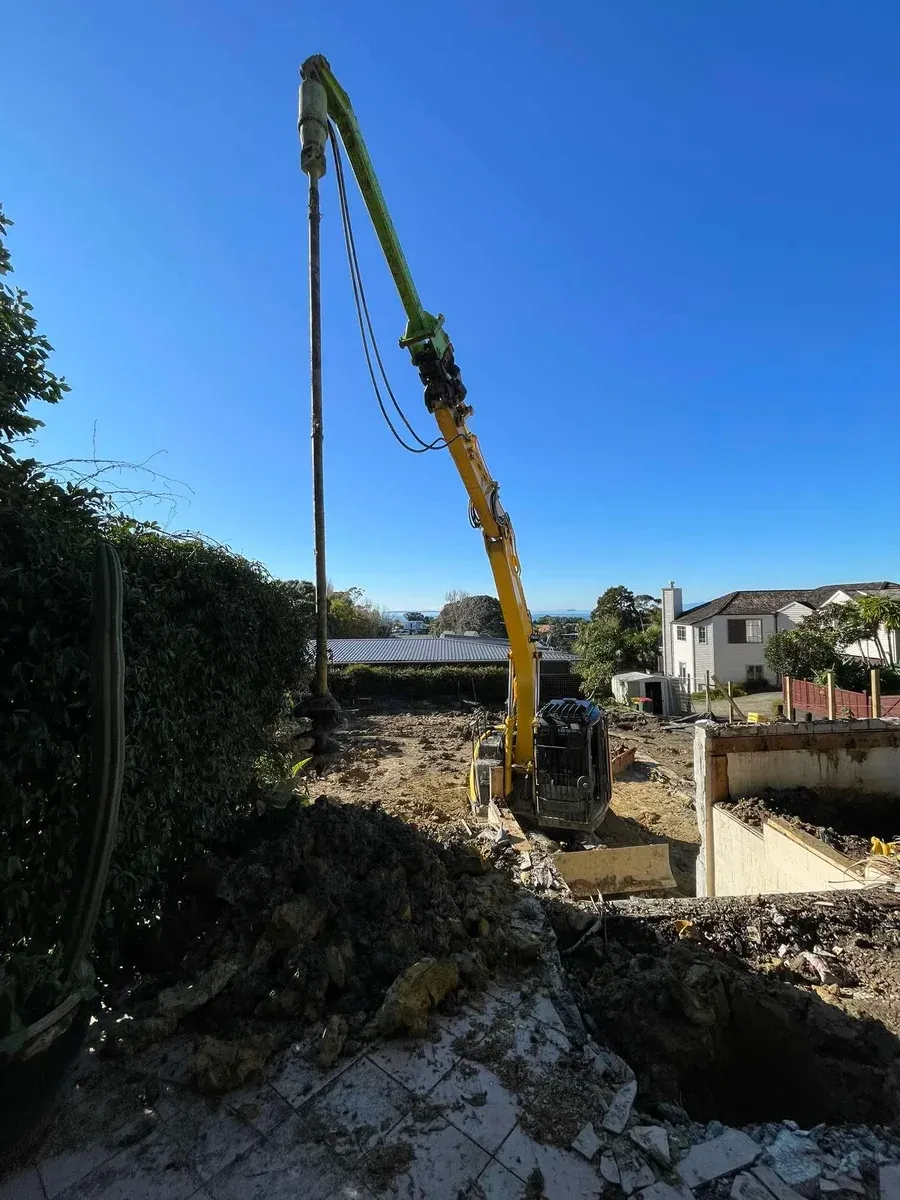
Complete Site Demolition in Auckland
Full building demolition and site clearance across Auckland. We sort the asbestos, separate waste on-site, pull the foundations, and hand over a clean level pad ready for whatever's next.
Our site demolition team handles site demolition Auckland property owners and developers need when a building has to come down properly. Old residential houses, commercial buildings, industrial structures: we bring them down safely and hand over a clean, level site ready for whatever comes next.
What is Complete Site Demolition?
Complete site demolition means taking a building to ground level and clearing the lot: the structure, foundations, hard surfaces, service connections, and all debris. In Auckland, most buildings put up before the mid-1990s contain asbestos in some form. That means every demolition project we take on starts with a thorough asbestos survey before any machine touches the structure. Not optional. It's a legal requirement, and it's the only way to do the job without cutting corners. We run the full process from consent application through to clean pad handover, including on-site waste separation and disposal at consented facilities. WorkSafe New Zealand's demolition health and safety requirements mandate asbestos identification and licensed removal before any building demolition starts in New Zealand.
- Full residential house demolition: weatherboard, brick, concrete block, and mixed-material homes
- Commercial building demolition for offices, retail premises, warehouses, and light industrial structures
- Pre-demolition asbestos surveys and coordination with licensed asbestos removalists
- Waste separation on-site: timber, concrete, steel, and general waste sorted for recycling
- Foundation removal and below-ground structure extraction
- Complete site clearance to a clean, level pad ready for earthworks or new construction
We're based in Coatesville and we've been demolishing buildings across Auckland for 25+ years, from Silverdale in the north to Manukau in the south to Botany in the east. Single houses on suburban sections right through to multi-building commercial clearances. Our operators run excavators with demolition attachments daily. And because we're a civil construction company, your site moves straight from knockdown into earthworks and site preparation without sitting idle waiting for a second contractor to show up.
When You Need Us
When You Need Complete Site Demolition in Auckland in Auckland
Old House Being Replaced With a New Build
The existing house has had its day and you want to build new on the same site. We demolish it, sort any asbestos in the cladding or roofing, remove the foundations, and hand over a clean pad ready for the rebuild.
Commercial Site Being Cleared for Redevelopment
The buildings have to go before the site can be redeveloped. We demolish the structures, sort and dispose of the waste, and clear to bare ground so civil works can start.
Pre-1990s House With Asbestos to Manage
Older Auckland homes almost always have asbestos somewhere: roofing, cladding, textured ceilings, soffit linings. We run the asbestos survey first, coordinate licensed removal of everything that comes back positive, then get on with the main demolition once the site is clear.
Multiple Buildings on a Large Section
A rural or semi-rural property with a house, sheds, garages, and outbuildings, all needing to come down before subdivision or new development work starts. We work through each structure and leave the full site ready for earthworks.
Fire-Damaged or Structurally Unsafe Building
A building hit by fire, storm, or structural failure that needs to come down safely. We look at the structural risks before anything starts, plan the demolition sequence around those risks, and take it down without touching neighbouring structures.
Industrial Structure That Needs Dismantling
An industrial building with steel framing, concrete panels, or heavy structural elements. We use hydraulic shears, pulverisers, and sorting grabs to dismantle it properly, separating steel and concrete for recycling rather than sending it all mixed to the tip.
Clearing the Site Before Subdivision Earthworks
Existing buildings have to come down before bulk earthworks can start on a new subdivision. We demolish and clear, then move straight into the earthworks programme with our own machines. No idle gap between stages.
Old Foundations and Below-Ground Structures Still In the Ground
The building's down but old concrete foundations, basement walls, or underground tanks are still there. We break them up and extract them so the site is properly cleared for new foundations.
Our Process
Our Complete Site Demolition in Auckland Process
Blake Civil Construction follows a systematic approach for every complete site demolition in auckland project.
Site Assessment and Asbestos Survey
We visit the site before anything else. Look at the building type, structure, access, and what's sitting nearby. Then we arrange a qualified asbestos surveyor to inspect and sample before any demolition work is planned. No building gets touched without that step done.
Consent Application and Service Disconnections
We confirm with Auckland Council what building and resource consents are required, then coordinate service disconnections (water, power, gas, wastewater) with the relevant network providers. Getting these sorted before work starts is non-negotiable. Mid-job disconnections cause delays and compliance headaches.
Asbestos Removal (If Required)
If the survey finds asbestos-containing materials (and in pre-1990s buildings it usually does), we bring in licensed removalists to strip and dispose of everything under controlled conditions before the main demolition begins. That's what WorkSafe New Zealand requires.
Controlled Demolition
Our operators bring the building down using excavators with the right attachments for what's in front of them: hydraulic breakers, pulverisers, sorting grabs. The sequence follows the plan we built around the structural risks. Dust suppression runs throughout and the noise stays within council hours.
Waste Separation and Disposal
Material gets sorted on-site as the building comes apart: timber, concrete, steel, and general waste into separate streams. Recyclable material goes to approved facilities. Whatever can't be recycled goes to a consented disposal site. Not a mixed skip.
Site Clearance and Clean Pad Handover
All debris out. Old foundations extracted. Underground structures broken out. Site graded level. That's handover. A clean pad your engineer, surveyor, or builder can actually start from, not a cleared area with half the old foundations still in the ground.
Need a Quote for Complete Site Demolition in Auckland?
Get in touch for a free, no-obligation quote on your project.
Why Choose Us
Why Choose Blake Civil for Complete Site Demolition in Auckland?
Asbestos Survey Before Any Machine Moves
Most Auckland buildings from before the mid-1990s have asbestos somewhere: roofing, cladding, textured ceilings, pipe lagging. We arrange a qualified survey, coordinate licensed removal, and get the all-clear before the knockdown starts. It's the only way to do the job legally. We don't treat it as a checkbox.
Material Sorted On-Site, Not Mixed and Tipped
As the building comes down we separate timber, concrete, steel, and general waste into distinct streams. Recyclable materials go to approved facilities. That keeps usable material in the construction cycle and cuts disposal costs versus sending everything mixed to one destination.
Consents and Compliance Managed
Auckland Council building consent for demolition, resource consent for heritage and special character overlays, WorkSafe asbestos regulations, HAIL site considerations: we sort every compliance requirement before a wall comes down. You don't need to know what all of those involve. We do.
Straight From Knockdown Into Earthworks
Being a civil construction company means we carry the project from demolition into earthworks and site preparation as one continuous programme. Your site moves from knockdown to building pad without sitting idle waiting for a second contractor to mobilise.
Right Attachment on the Right Machine
Hydraulic breakers for concrete, pulverisers for reinforced structures, shears for steel framing, sorting grabs for pulling material apart as it comes off the building. Matching the attachment to the task is what makes demolition move efficiently instead of just being destructive.
A Graded Pad, Not Just a Cleared Site
The job doesn't finish when the building's down. We pull old foundations, break out below-ground structures, remove all debris, and grade level. Handover is a pad your builder can walk straight onto. Not a cleared area with rubble and remnants still in the ground.
Related Complete Site Demolition in Auckland Services
Blake Civil Construction provides services that complement our complete site demolition in auckland expertise.
Concrete Demolition Auckland
Concrete breaking, removal, and disposal for demolition and renovation.
Site Remediation
Contaminated soil removal and treatment to environmental standards.
Land Clearing
Clearing vegetation, trees, stumps, and debris for site development.
Tip Truck Wet Hire
Tip truck with operator for carting soil, aggregate, and demolition material.
Bulk Earthworks
Large-scale cut and fill operations for subdivisions and commercial sites.
Complete Site Demolition in Auckland Coverage - Auckland Wide
Blake Civil provides professional complete site demolition in auckland services across the greater Auckland region.
Our Coatesville base provides rapid response across Auckland for residential, commercial, and industrial complete site demolition in auckland projects.
Contact Blake Civil for Professional Complete Site Demolition in Auckland
When your Auckland project requires professional complete site demolition in auckland, Blake Civil Construction delivers the experience, equipment, and expertise to complete it properly.
43 Mill Flat Road, Coatesville 0793
We handle complete site demolition across greater Auckland from our Coatesville base. Residential, commercial, industrial: call us, tell us what you've got, and we'll come out and look at the site.
Family-owned, Coatesville-based. We've been bringing buildings down safely and handing over clean sites for 25+ years. Same approach, every job.
Explore More
Related Services
More services from our Demolition Company in Auckland category
Ready to Start Your Next Project?
Contact Blake Civil Construction for expert earthworks services across Auckland. Our team is ready to discuss your project and provide a quote.