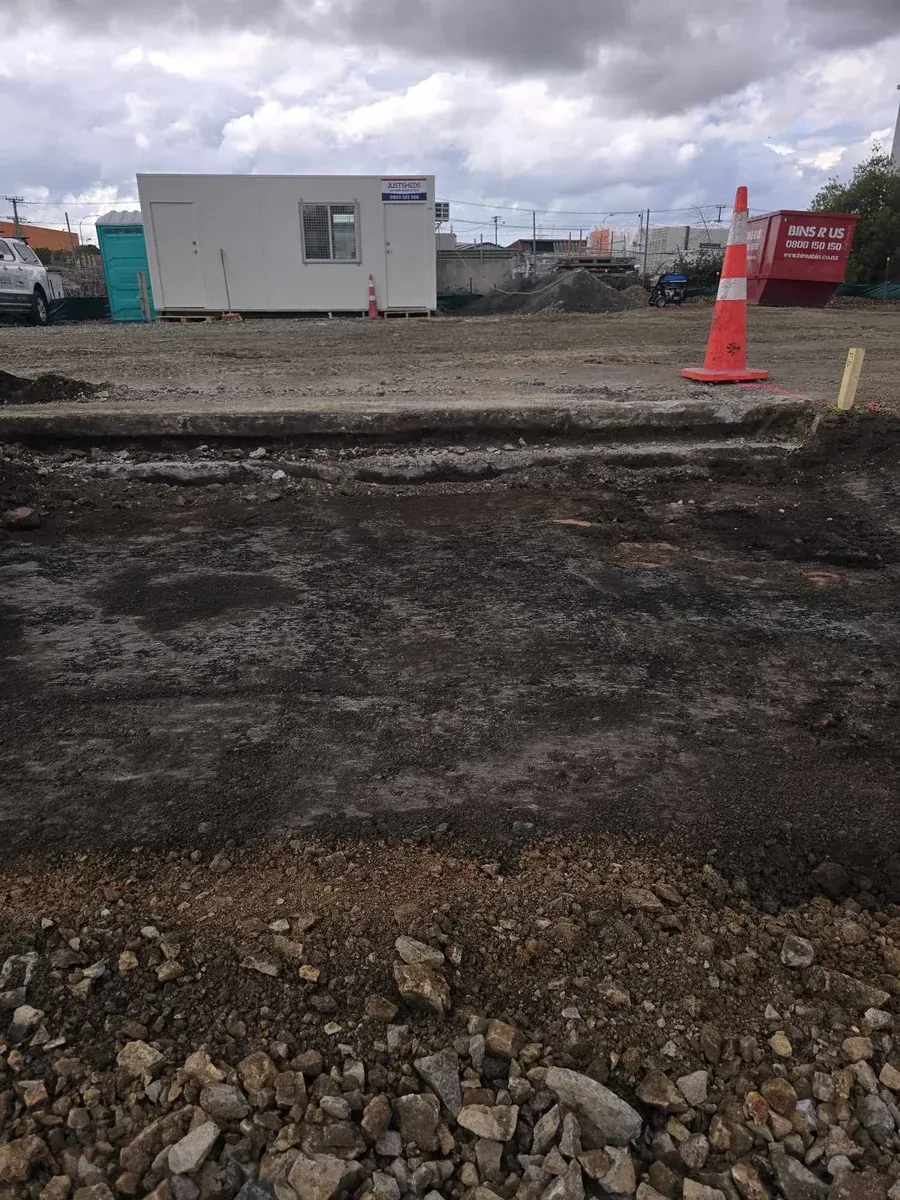
Site Preparation in Auckland
Getting your Auckland section ready to build, topsoil stripping, stabilised entrances, erosion controls, tree protection, and temporary drainage so construction starts without compliance problems.
Site preparation in Auckland is everything that happens between resource consent approval and the first foundation pour. We're a family business based in Coatesville, and our site preparation crew has been setting sections up for construction for over 25 years, stripping topsoil, forming access tracks, putting in erosion controls, protecting trees. The work that makes it possible for every trade after us to get on with the job without delays or council compliance issues.
What is Site Preparation?
Site prep is the unglamorous work that most people don't think about until something goes wrong. Strip and stockpile topsoil. Build a stabilised construction entrance. Install silt fences and sediment controls to Auckland Council requirements. Form access tracks for machinery and delivery trucks. Set up tree protection where the consent requires it. Put in temporary drainage so water goes somewhere useful rather than through the building platform. When site prep is done right, the rest of the project flows. When it's skipped or done badly, you get bogged trucks, tracked mud on the road, and a council inspector asking questions. Auckland Council's building and consents requirements mandate sediment and erosion controls on all development sites, following the GD05 guideline for discharges to land and water.
- Topsoil stripping and stockpiling for later reinstatement
- Stabilised construction entrance installation to TP90 and GD05 standards
- Silt fence and sediment control setup for Auckland Council compliance
- Access track formation for machinery and delivery vehicles
- Tree protection zone fencing and root zone management
- Temporary drainage and diversion channels for water management Preparing Auckland sections for residential, commercial, and subdivision construction from our Coatesville base, 25+ years in the ground.
Builders working from Orewa to Manurewa and across to Glen Eden have used us to get their sites ready for years. We turn up when we say we will, the sediment controls go in before the topsoil comes off, and the site is compliant from day one.
When You Need Us
When You Need Site Preparation in Auckland in Auckland
New House Build on a Rural Section
Consent is approved and the builder is a few weeks away. We strip the topsoil from the building platform, form an access track, install silt fences and a stabilised entrance, and get the site ready for foundation work. The builder turns up to a site they can actually use on day one.
Subdivision Lot Preparation
Multiple lots across a new subdivision stage need preparing before individual builds begin. We strip topsoil, install erosion controls along lot boundaries and drainage paths, and form access routes across the stage. Each lot handed over in a condition that's ready to build on.
Commercial Development Setup
A commercial building site needs proper setup before the main contractor mobilises. Stabilised entrance, sediment controls, stripped building pads. The construction team arrives to something they can work with, not a muddy paddock with no access.
Steep Section with Erosion Risk
Sloping clay section facing the prevailing rain. This is where sediment controls earn their keep. We install diversion drains above the work area to intercept clean water, silt fences along the downhill boundary to catch runoff, and stabilise exposed batters before Auckland's wet season comes through.
Section with Protected Trees
Consent conditions require trees to be retained. We fence the root protection zones before any machine enters the site, not after we've already worked around the trees. Access routes get planned to avoid root zones, and ground protection boards go down where tracks pass close to retained trees.
Lifestyle Block Preparation
A rural lifestyle block with uneven ground and limited road access. We cut a track from the road to the building site, strip the topsoil, install erosion controls, and set up temporary drainage before earthworks start. Rural sections often have wet patches and long driveways that need dealing with before the earthworks machine can even get to the building site.
Wet Site That Holds Water
Your section sits low, or has high groundwater, and the surface stays wet after rain. We install temporary subsoil drains, cut diversion channels to move water away from the work area, and manage surface water so the building platform stays dry enough to actually work on.
Site Re-Preparation After a Project Delay
The project stalled after initial earthworks. Sediment controls have failed, the stabilised entrance is worn out, and regrowth has started across the building pad. We reinstate everything, silt fences, entrance, cleared pad, and get the site back into compliant condition so the next phase can proceed without a compliance notice waiting for it.
Our Process
Our Site Preparation in Auckland Process
Blake Civil Construction follows a systematic approach for every site preparation in auckland project.
Site Walkthrough and Preparation Plan
We visit the section, read the consent conditions and drawings, and work out what site prep is actually needed, where topsoil gets stripped, where the access goes, where sediment controls need to be, and what tree protection the consent requires. A lot of problems in site prep come from not reading the consent conditions carefully enough before starting.
Erosion and Sediment Control Installation
Before any ground moves, the silt fences, diversion drains, and stabilised entrance go in. In line with your ESCP and Auckland Council's TP90 guidelines. The rule is controls first, then disturbance, not controls after the first rain event has already run off the site.
Stabilised Entrance and Access Track Formation
Clean aggregate over geotextile fabric at the access point, built to the dimensions your ESCP specifies, typically 10-15 metres and the full width of the entry. Then access tracks across the section so machinery and trucks can move without turning the ground into a bog. On rural sections around Kumeu, Helensville, and Warkworth, the access track alone can be hundreds of metres of work.
Topsoil Strip and Stockpiling
Topsoil comes off the building platform, driveway alignment, and work areas at the right depth, usually 100-200mm. It goes into a designated stockpile bounded by silt fences, separated from any clay subsoil so it stays usable for landscaping at the end of the build. Mixing topsoil with clay is one of those mistakes that costs real money later.
Tree Protection and Temporary Drainage
Protection fencing goes up around any trees the consent identifies before any machine enters the site. Then temporary drainage, cut-off drains, swales, or piped outlets, to manage water across the section during construction. On sections with springs or high groundwater, this step is more involved than a flat urban section.
Final Inspection and Handover
We walk the completed site prep with you or your builder, sediment controls in place and functioning, access formed, topsoil stockpiled, building platform ready. If anything isn't right, we fix it before we leave. The builder shouldn't arrive to find the entrance is worn out or the silt fence has already been flattened.
Need a Quote for Site Preparation in Auckland?
Get in touch for a free, no-obligation quote on your project.
Why Choose Us
Why Choose Blake Civil for Site Preparation in Auckland?
TP90 and GD05 Erosion Controls, Done Before Anything Else
Every site prep job we do meets Auckland Council's erosion and sediment control requirements under TP90 and GD05. The controls your ESCP specifies go in before topsoil is touched, silt fences, diversion drains, decanting devices. Council inspects a compliant site from the first day because that's how we set it up.
Stabilised Entrance Built to Stay That Way
A stabilised construction entrance stops trucks and machinery tracking mud onto public roads. We build them to the dimensions your ESCP specifies using clean aggregate over geotextile. And we maintain them through the build, a worn-out entrance that's been neglected for two months does the same job as no entrance at all.
Wet Weather and Auckland Clay
Auckland's heavy clay turns to mud fast. We've been managing site access, protecting exposed ground, and keeping sediment controls working through high-rainfall months on Auckland clay for over 25 years, on sections from Glen Eden to Orewa to Manurewa. It's not complicated, it just requires doing the right things in the right order before the rain comes.
Topsoil Stripped and Kept Separate
Topsoil matters at the landscaping end of the project. We strip it to depth, stockpile it with silt fence protection, and keep it separate from clay subsoil. Mixed topsoil and clay is difficult to use for gardens and lawns. Properly stockpiled topsoil is ready to spread when the build wraps up.
Tree Protection Fenced Before Machines Go On Site
If your consent identifies trees for retention, the protection fencing goes up before the first machine drives on. Not after we've already worked around them. Root protection zones get respected, ground protection boards go down where tracks pass close to retained trees, and access routes get planned to stay clear.
Same Crew Straight Into Earthworks
We handle site preparation and all earthworks ourselves. The crew that preps your site moves straight into excavation and platform formation without a handover between contractors. No gap, no wait, no brief to write for an incoming team. The same people who know your site from day one are the ones doing the earthworks.
Related Site Preparation in Auckland Services
Blake Civil Construction provides services that complement our site preparation in auckland expertise.
Site Vegetation Clearing
Clearing vegetation, trees, stumps, and debris for site development.
Post-Prep Grading Work
Precision excavation and grading for level building sites and drainage falls.
Site Development Earthworks
Large-scale cut and fill operations for subdivisions and commercial sites.
Foundation Dig After Prep
Bulk excavation for foundations, basements, and underground services.
Site Stormwater Management
Stormwater detention, retention, and disposal systems for Auckland sites.
Site Preparation in Auckland Coverage - Auckland Wide
Blake Civil provides professional site preparation in auckland services across the greater Auckland region.
Our Coatesville base provides rapid response across Auckland for residential, commercial, and industrial site preparation in auckland projects.
Contact Blake Civil for Professional Site Preparation in Auckland
When your Auckland project requires professional site preparation in auckland, Blake Civil Construction delivers the experience, equipment, and expertise to complete it properly.
43 Mill Flat Road, Coatesville 0793
Construction and development sites across greater Auckland, residential, commercial, and subdivision work from our Coatesville base.
Family-owned, Coatesville-based, 25+ years setting Auckland sections up for construction. We get it right before the builder arrives.
Explore More
Related Services
More services from our Earthworks Contractor Auckland category
Building Pad Preparation in Auckland
Building pad preparation for new homes, townhouses, and commercial buildings across Auckland, cut and fill, compaction to spec, and platforms that pass testing first time on sloped and clay-heavy sections.
Bulk Earthworks in Auckland
Large-scale cut and fill moving thousands of cubic metres for subdivisions, commercial developments, and infrastructure projects across Auckland.
Civil Construction Earthworks in Auckland
Infrastructure-scale earthworks for roads, subdivisions, and commercial sites across Auckland. We've been doing this work for over 25 years and we know how to keep civil programmes on track.
Compaction Services in Auckland
Ground compaction for building pads, driveways, and subdivisions. Fill placed to spec, rolled properly, tested so you pass first time and keep the project moving.
Consented Land Filling in Auckland
Controlled placement of approved fill material under Auckland Council resource consent conditions, compaction testing, environmental monitoring, and documentation for council sign-off.
Excavation and Grading in Auckland
Cut and fill, site levelling, and GPS-guided grading to finished levels for new builds, commercial developments, and rural sections across Auckland.
Ready to Start Your Next Project?
Contact Blake Civil Construction for expert earthworks services across Auckland. Our team is ready to discuss your project and provide a quote.